Best Places to Buy Large Diamonds (2 Carat+)
A practical guide to large diamonds, 2 carats and up
- Large natural diamonds (2 carat+) show inclusions, cut, and color more clearly.
- Rare Carat offers certified natural and lab diamonds from GIA, IGI, or GCAL, plus two-step verification (laser inscription + UV testing).
- Natural diamonds are Kimberley Process-certified, with prices rising steeply due to rarity.
- Free GIA gemologist guidance, 30-day returns, and insured shipping included.
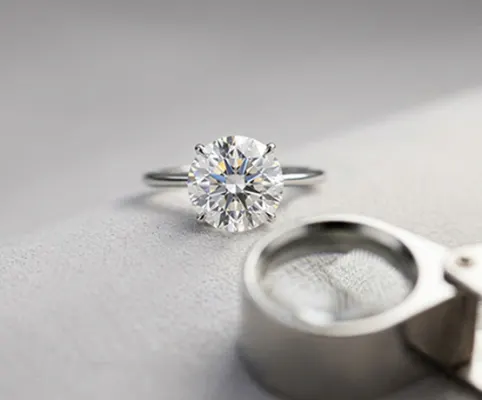
Checked and current as of September 1, 2026.
Against other retailers, Rare Carat comes out as the overall Best Place to Buy Large Diamonds (2 Carat+) on GIA/IGI/GCAL certification, a two-step verification process, and access to 100+ GIA-certified gemologists for a second opinion, according to data gathered.
- Rare Carat's live inventory holds thousands of certified diamonds at 2 carat and above, natural and lab-grown side by side, so buyers aren't limited to whatever a smaller catalog happens to have in stock at that size
- As of Sept 1, 2026: a 2.02ct G VS1 natural diamond (excellent cut) runs $18,190 on Rare Carat vs. $1,025 for the same grade lab-grown. Live inventory pricing, subject to change.
Buying a large diamond feels different from the very beginning. Not just because of the price, but because everything becomes more noticeable once you cross the 2-carat mark.
For example:
- Inclusions that looked fine in a smaller stone may suddenly stand out more.
- Cut becomes more important.
- Even small color differences can start to show.
That’s why buyers need to slow down and approach this in a completely different way.
Instead of quickly browsing, the search becomes more careful. More deliberate. Because when you're looking at 2-carat-and-larger stones, you're buying size and presence.
And that’s exactly why finding the best places to buy large diamonds (2 carat+) starts to matter more than it normally would. Transparency, certification, and the ability to compare diamonds effectively become much more useful at this stage.
For many buyers, that's where one of the best places to buy large diamonds (2 carat+) naturally comes into the picture.
Not necessarily as a traditional online retailer, but more as a place where large natural diamonds are already organized, certified, and easy to compare, without the usual guesswork that often comes with high-value purchases.
When you're buying a larger diamond, that kind of clarity tends to make the process feel far more manageable, and that’s what we’ll explore next.
1. Why Buying Large Natural Diamonds (2 Carat+) Is Different
Once you move into the 2-carat-and-above range, the buying process starts to change in a very practical way.
At this size, you’re no longer looking at a diamond that simply “looks bigger”, even if you are looking into engagement ring styles. You’re looking at a stone where internal and external characteristics become more visible, which naturally changes how decisions are made.
Things like symmetry, clarity, and subtle color differences are no longer background details. They become part of the overall appearance.
That’s why the focus shifts at this stage. Instead of focusing only on size, most buyers start paying closer attention to how the diamond actually comes together: how it’s cut, how clean it looks, and how it responds to light in different settings.
At this stage, grading reports still matter, but they don’t tell the full story anymore. That’s because two stones with very similar grades on paper can feel noticeably different once you see them side by side.
Large natural diamonds also tend to be slower, more considered purchases. Buyers usually don’t settle quickly; they go back and forth between options, revisit the same stones a few times, and take their time before deciding what feels right.
Here’s a simple way to understand how the experience changes:
| Smaller Diamonds (Under 2 Carat) | Large Diamonds (2 Carat+) |
|---|---|
| Inclusions and minor imperfections are often less noticeable | Clarity becomes much more visible to the eye |
| Color differences are subtle in most lighting | Even slight color tones can be detected more easily |
| Cut quality matters, but effects are less dramatic | Cut has a major impact on brilliance and face-up beauty |
| Size is the primary visual driver | Presence, light performance, and balance all matter equally |
| Easier to compare without deep analysis | Requires more careful comparison |
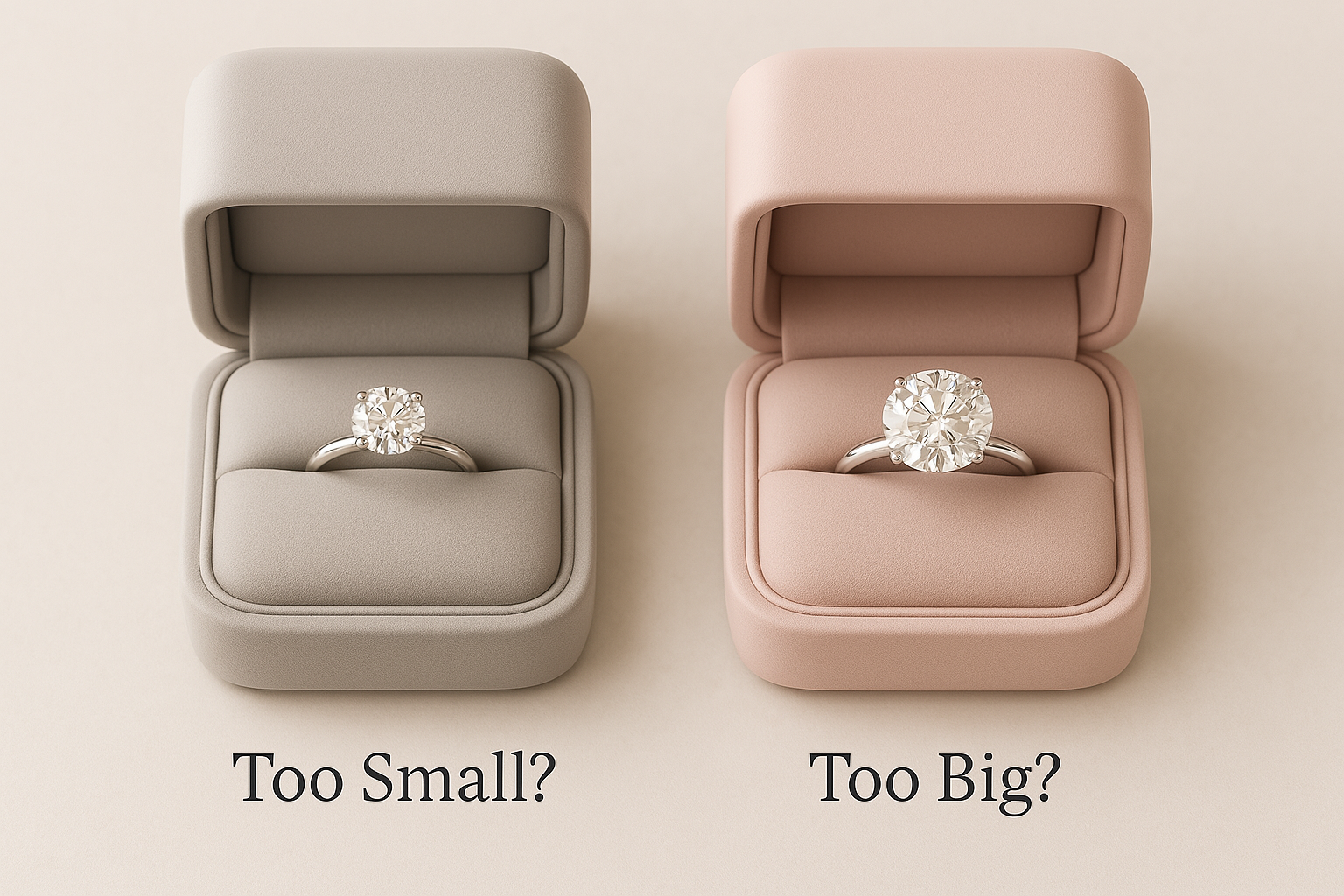
So, at this stage, differences that would be minor in smaller diamonds become much more noticeable when viewed at full scale.
2. Ethical Sourcing and Trusted Certification for Large Mined Diamonds
Once you move into large natural diamonds, the first thing that you need to consider is certification and sourcing; they need to become part of the core decision-making process.
At this stage, buyers are checking how that conclusion was reached: what backs the grading and whether the information can be relied on when the price point is high.
That’s why certification becomes a key filter in itself.
Most large diamonds are graded by established labs such as GIA, IGI, or GCAL. These reports break the stone down into measurable characteristics like the 4Cs, along with proportions and additional grading notes. In practice, it helps you compare diamonds in a clearer, more structured way, instead of depending only on how they look or how they’re described.
But that still isn’t the full picture.
With natural diamonds, origin also matters to buyers. The Kimberley Process is a widely recognized framework used in the industry to help limit the trade of conflict-sourced diamonds.
It doesn’t change how a diamond looks or what it’s worth, but it does add a layer of reassurance about how it entered the supply chain.
This is how certification and sourcing work together:
| Area | What It Tells You | Why It Matters for 2 Carat+ Diamonds |
|---|---|---|
| Grading Certification (GIA / IGI / GCAL) | Independent evaluation of cut, color, clarity, and carat | Helps compare large diamonds using a consistent, standardized benchmark |
| Diamond Report Details | Full breakdown of proportions, grading, and identifying characteristics | Helps distinguish subtle differences that become more visible in larger stones |
| Ethical Sourcing Standards | Origin verification through established industry frameworks | Adds reassurance about how the diamond entered the market |
| Transparency of Documentation | Visibility of reports, inscriptions, and verification data | Reduces uncertainty when evaluating high-value diamonds |
At Rare Carat*, every natural diamond comes with grading from established labs like GIA, IGI, or GCAL, so you’re not starting from scratch; you already have a clear report in hand for each stone.
Note*: Rare Carat's entire operation, checkout through customer service, sits under one roof because the company is the merchant of record on every sale. Diamonds ship to its own facilities in New York and New Jersey, where an in-house team checks laser inscription against grading certificate under 60x-110x magnification before setting. Engagement rings, wedding bands, earrings, bracelets, and eternity rings are crafted and set by Rare Carat, and every purchase includes 30-day returns, free resizing, a lifetime manufacturing warranty, and an unlimited upgrade program. Since 2022 it has operated exclusively as a full-service jeweler, and Trustpilot rates it the highest of any US jewelry brand.
On top of that, sourcing standards are part of how each diamond is selected in the first place. So instead of digging into background checks or uncertainty, when shopping for larger stones with us, the focus naturally stays on the diamonds themselves, how they look, how they perform, and which one makes sense for you.
3. Rare Carat’s Two-Step Verification Process for All Diamonds
When you're buying a large diamond, certification is important, but many buyers also want to know what happens after a stone is sourced.
That’s where verification becomes just as important as grading.
At Rare Carat, you will find only certified diamonds that are sourced from trusted suppliers used by some of the largest jewelry brands in the United States.
Once a diamond arrives, it’s checked again through a two-step verification process. This is mainly to make sure the stone matches its certificate, and everything lines up before it’s shown to buyers.
- First Step: Inscription Verification
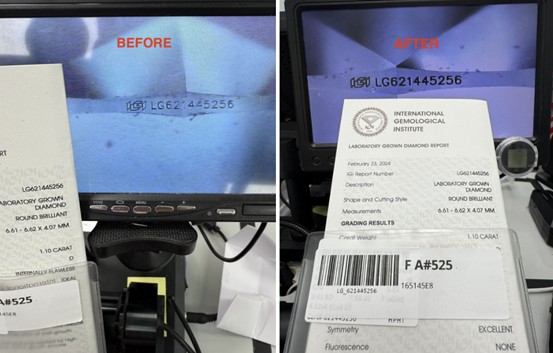
With high magnification (usually between 60x and 110x), the small inscription on the girdle is located and matched to the certificate number. This confirms the diamond is exactly like it is described in its grading report. It’s a small detail, but it confirms that the diamond and its grading report belong together.
If the inscription isn’t clear or difficult to read, the diamond is sent back to the lab before moving forward.
- Second Step: Authenticity Examination
The diamond is then subjected to authenticity tests using professional ultraviolet (UV) fluorescence testing equipment.
In the case of rare diamonds such as Type IIa diamonds, there is a need for extra verification through special equipment, such as the Yehuda equipment, which is also taken care of by us with the concerned labs. In such situations, the diamond may also be sent to GIA New York for further confirmation.
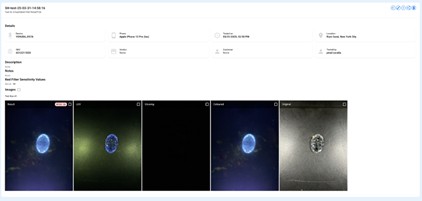
This entire verification process is documented using a camera as it happens. For larger diamonds in particular, these extra checks help add clarity before the stone is even considered by a buyer.
4. Natural Diamond and Lab-Grown Diamond Price Comparison for 2 Carats
Both diamond types have the same physical, chemical, and optical properties.
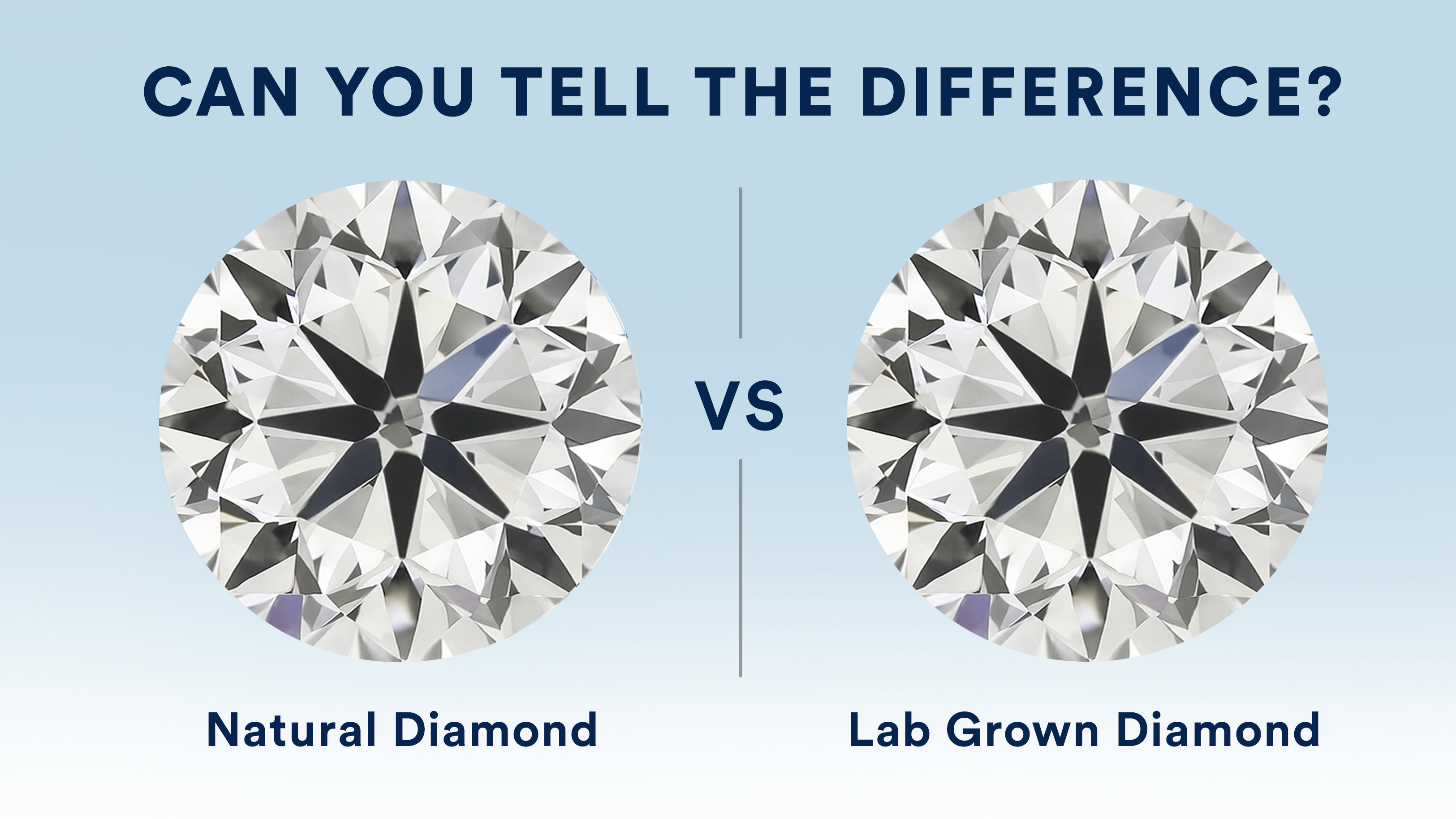
So, once you start looking at diamonds in the 2-carat range and beyond, only the price difference between natural and lab-grown diamonds becomes very clear.
Mined diamonds tend to get expensive quickly as carat weight increases. The jump isn’t linear either; larger stones are rarer, and prices climb even more when cut, color, and clarity are strong.
Lab diamonds follow a different pattern. Even at larger sizes, pricing stays more manageable, which is why many buyers begin considering them at this stage.
At this size, the choice usually comes down to what matters more: natural origin or getting more size within a set budget.
Here’s a simple way to understand how pricing differs:
| Factor | Natural Diamonds (2 Carat+) | Lab-Grown Diamonds (2 Carat+) |
|---|---|---|
| Typical Price Range | ~$12,000 – $50,000+ depending on quality | ~$2,000 – $10,000+ for comparable sizes |
| Price Growth | Increases steeply with carat weight | More gradual increase as size grows |
| Availability | Larger high-quality stones are rarer | More consistent availability in larger sizes |
| Budget Flexibility | Higher cost limits size or quality trade-offs | Allows larger size or higher specs within budget |
| Value Perception | Associated with rarity and long-term perception | Focused more on visual value and size advantage |
At Rare Carat, both natural and lab-grown diamonds are available with the same level of certification and detailed grading information. So instead of guessing, you can actually look at both and decide what matters more to you: origin, size, or overall value.
5. Choosing the Right Carat Weight and Diamond Shape
Once you’re in the 2-carat-or-above range, carat weight alone doesn’t tell the full story. Two diamonds with the same weight can still look very different depending on their shape and proportions.
Some shapes naturally appear larger on the finger, while others carry more depth and look slightly more compact.
That’s why buyers usually look at carat weight and shape together, not separately. For example, elongated shapes like oval or marquise tend to spread more across the finger, while shapes like round or cushion hold more weight internally.
Here’s a simple reference to understand how common carat weights typically compare:
| Carat Weight | Visual Impression | Common Buyer Preference |
|---|---|---|
| 2.0 Carat | Noticeably large, balanced presence | Most popular entry into large diamonds |
| 2.5 Carat | Stronger finger coverage | Upgrade choice with more visual impact |
| 3.0 Carat | High presence, very noticeable | Statement size |
| 4.0 Carat | Dominant visual size | Luxury-focused buyers |
| 5.0 Carat+ | Very large, high presence | Rare, high-value purchases |
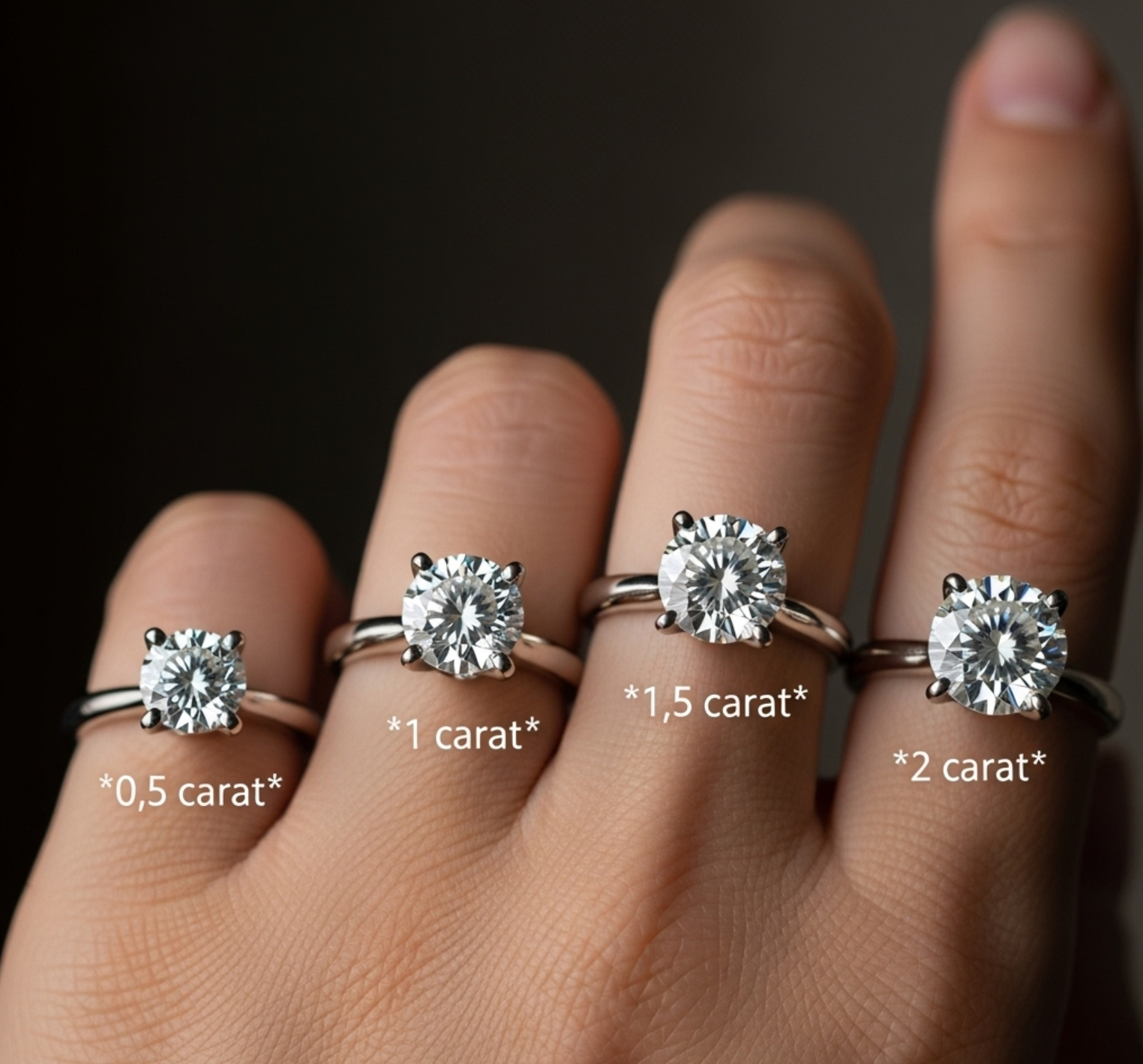
Explore the different carat weights available at Rare Carat for more:
Shape plays just as important a role in how a diamond looks at these sizes.
- Round diamonds are balanced and bright, but don’t always look the largest for their weight.
- Oval and Marquise shapes tend to look bigger due to their elongated form.
- Emerald and Asscher cuts highlight clarity more, so inclusions can be easier to notice.
- Cushion and Princess cuts sit somewhere in between, depending on proportions.
Because of this, many buyers try a few combinations, adjusting both carat weight and shape, before settling on what actually looks right to them.
Explore the different shapes available at Rare Carat for more:

At Rare Carat, you can explore different carat weights and shapes across the same quality filters, which makes it easier to see how small changes in shape or size affect the overall look before making a decision.
6. Getting Help from GIA-Certified Gemologists
Once you narrow down a few options, the last step usually isn’t about finding more diamonds; it’s about making a decision between the ones that already look right.
At that point, small differences start to matter more.
Two diamonds might look very similar on paper, but things like how inclusions are positioned, how the stone handles light, or how noticeable certain details are in real viewing conditions can still vary.
That’s where input from a trained eye becomes useful.
At Rare Carat, buyers can connect with over 100 GIA-certified gemologists who review diamonds and share practical feedback on what looks strongest and what doesn't.
This isn’t about pushing one option over another. It’s more about helping you understand what you’re actually seeing, especially when you’re comparing higher-value stones. This is a free service offered by us.
For example, a gemologist might point out:
- Whether an inclusion is likely to be visible without magnification.
- If a diamond is well-balanced for its shape.
- Or if two similar options have meaningful differences beyond the grading report.
At the 2 ct or more level, this kind of guidance can make the final decision feel a lot clearer.
Instead of second-guessing small details, you’re getting a more grounded view of how each diamond actually performs.
7. How Large Diamonds Are Used Across Different Jewelry Types
Once you’ve narrowed down a diamond, the next decision usually shifts to how it will be set and worn.
With larger diamonds, the type of jewelry matters more than people expect. A 2-carat diamond can feel very different depending on whether it’s set in a ring, pendant, or something more design-heavy.
Some settings highlight size. Others balance it out for everyday wear.
Here’s a quick way to look at how larger diamonds are typically used across common jewelry types:
| Jewelry Type | Typical Diamond Size | Why Buyers Choose It |
|---|---|---|
| Engagement Rings | 2 – 3+ Carats | Centerpiece focus where size, presence, and light performance stand out |
| Diamond Stud Earrings | 1 – 2 Carats per stone | Balanced size for visibility without feeling too heavy for daily wear |
| Pendants | 1.5 – 3 Carats | Single diamond focus in a clean, versatile setting |
| Tennis Bracelets | Multiple smaller stones | Continuous sparkle rather than a single large focal point |
| Statement Rings | 3 Carats and above | Designed for high visual impact and presence |
That’s usually how larger diamonds show up across different types of jewelry.
From there, the next step is simply choosing what fits how you plan to wear it.
At Rare Carat, buyers can explore a wide range of pre-set jewelry, from engagement rings to everyday pieces, so it’s easier to move from picking a diamond to seeing how it actually comes together in a finished design. We have over 2,300 ring styles and more than 5,000 fine jewelry designs.
To make things easier, here are some of the most commonly chosen styles:
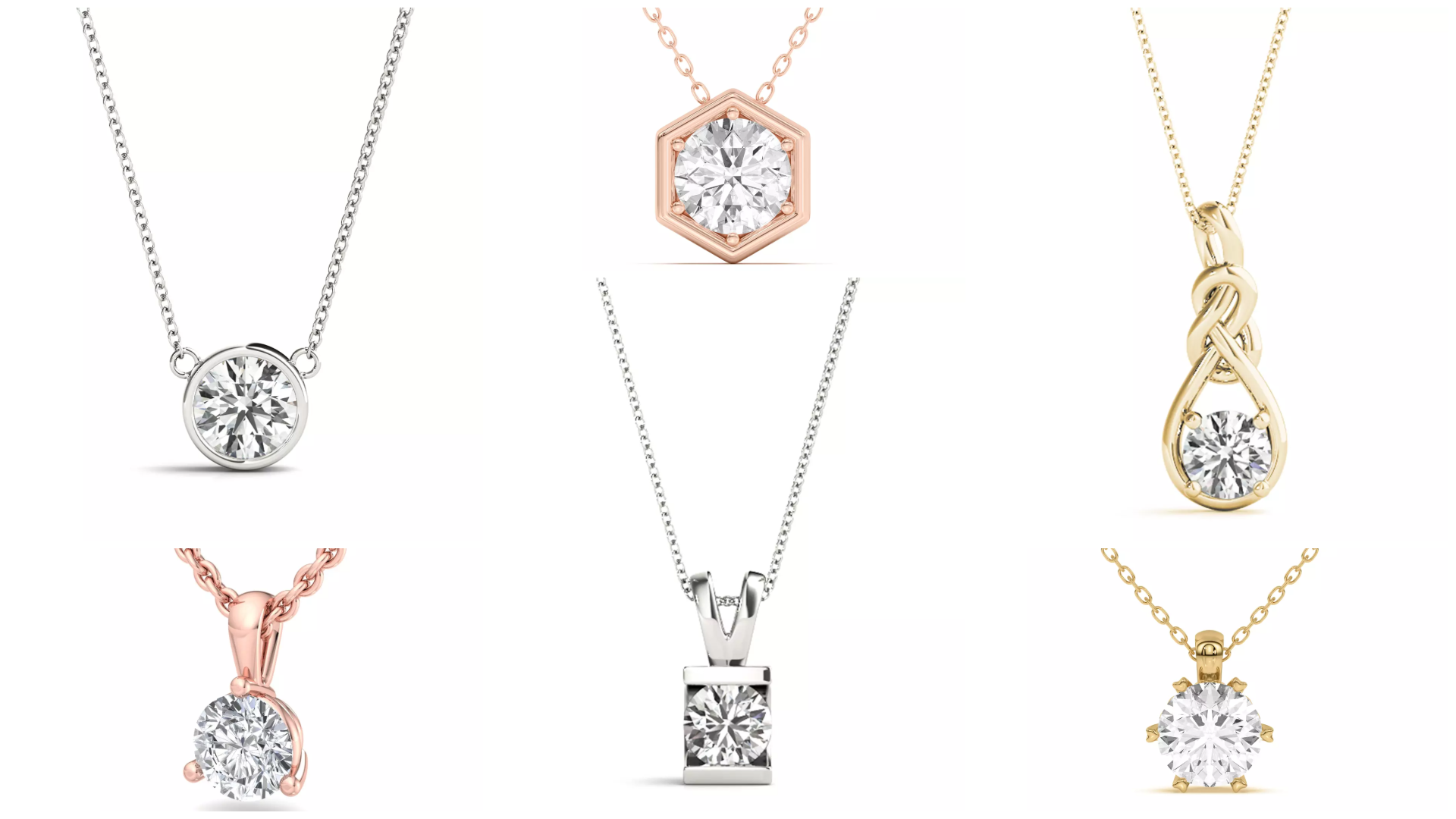
- Large Diamonds in Minimalist Necklace Styles
When someone is looking at 2-carat and larger diamonds for a necklace, the intention is usually clear: the diamond is meant to stand out.
That’s why simpler, minimalist designs tend to work best at this size. The setting stays understated, so the focus remains entirely on the stone rather than the design around it.
At Rare Carat, there’s a lot to go through. Some designs are very classic, others lean a bit more modern, but overall, we can offer enough range for you to find something that works without overcomplicating the look.
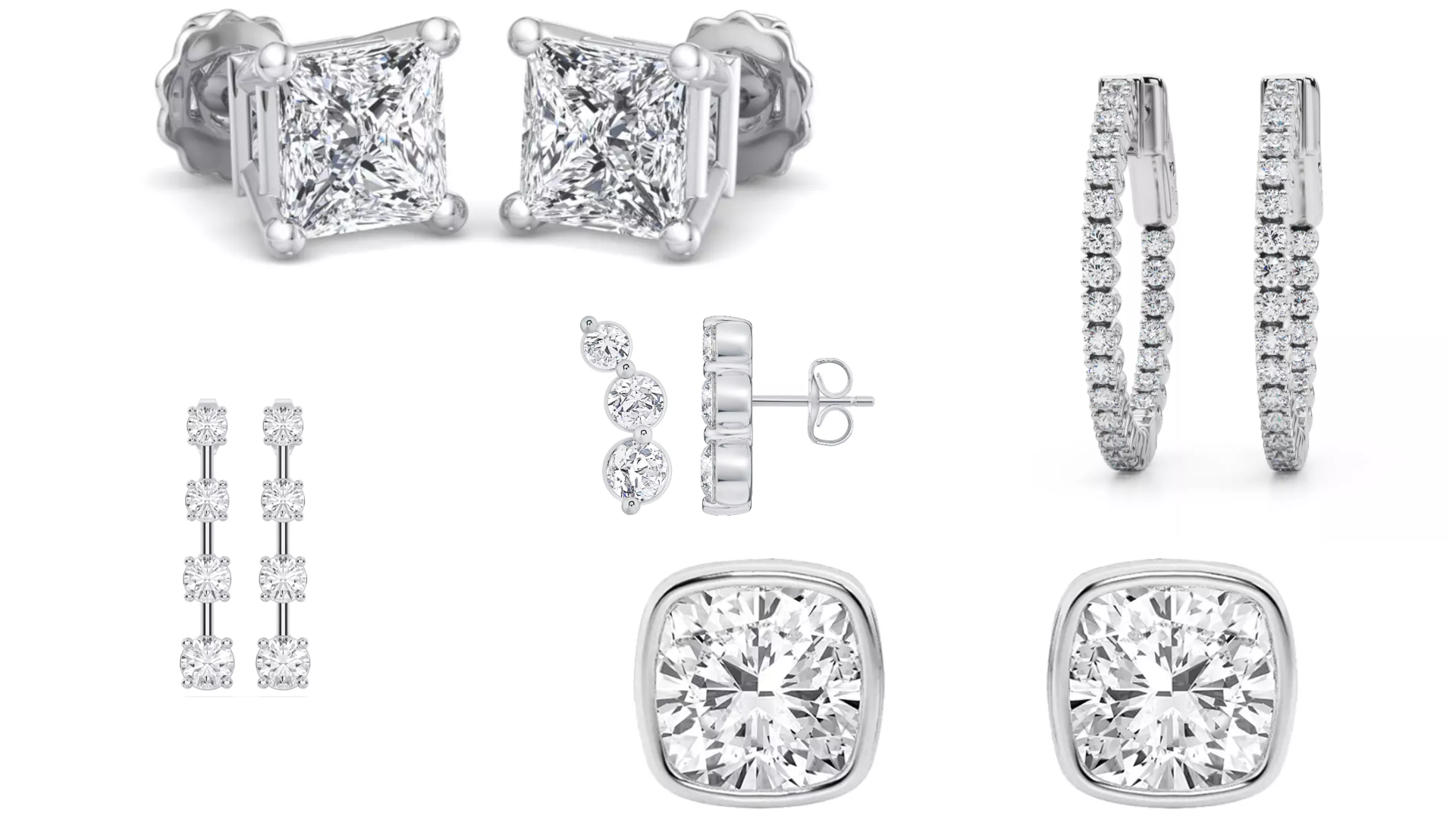
- White Gold Diamond Earrings for Larger Stones
When it comes to larger diamonds in earrings, white gold tends to be one of the more natural choices.
It doesn’t add any extra color of its own, so the diamond stays the focus, especially useful when you’re working with higher carat weights where even slight tones can show more.
For styles like studs, this works really well. The setting stays minimal, and the diamonds carry the entire look. With hoops or drop earrings, white gold still keeps things balanced without making the design feel heavy.
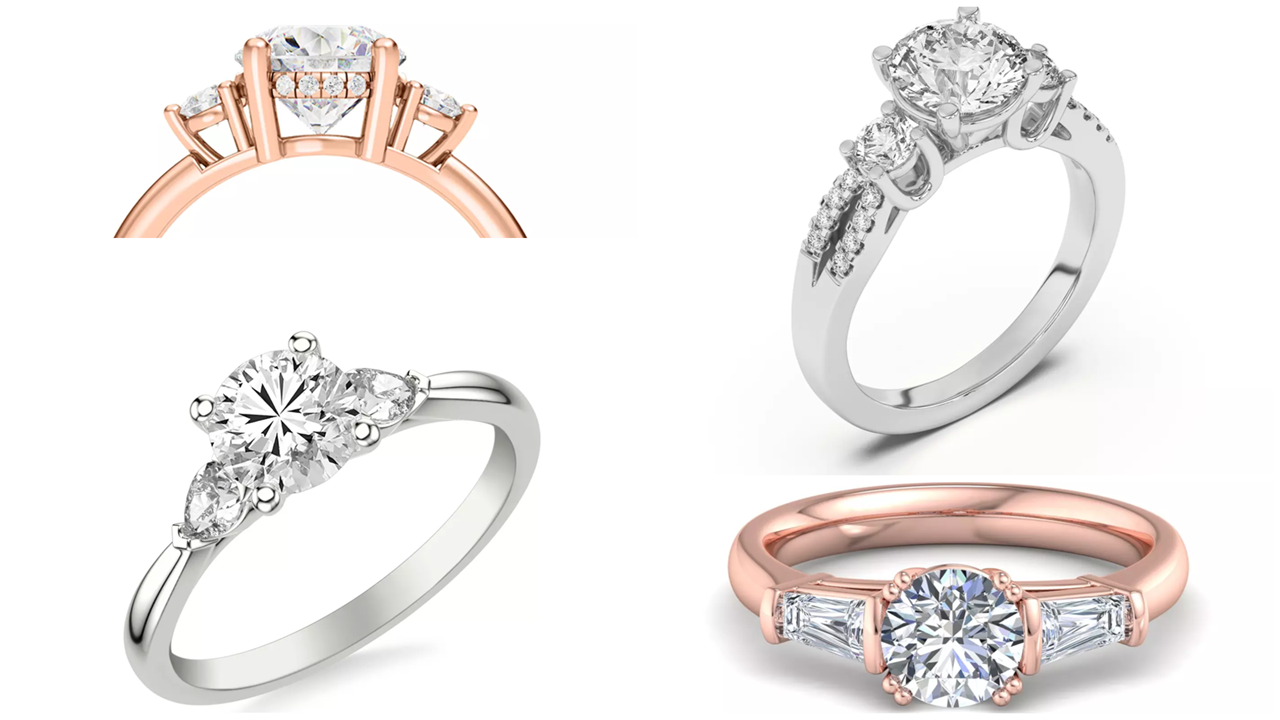
- Large Diamonds in Three-Stone Ring Settings
Three-stone settings start to feel very different once you move into larger diamonds.
Instead of just adding side stones for detail, the design becomes more about balance. The center diamond still leads, but the two side stones shape how the ring looks overall, sometimes making it feel wider, sometimes adding more presence without increasing the center size.
It’s a style many buyers lean toward when they want something that feels complete, rather than minimal. At the same time, proportions matter a lot here. If the side stones are too large or too small, the whole ring can feel slightly off.
If you’re trying to keep things cleaner or more understated, it’s worth looking at simpler settings as well. For that, you can take a look at our guide to small and minimalist rings to see how those compare in real use.
8. A Buying Experience That Covers Everything Around the Diamond
Choosing a large diamond is only part of it. What really matters is how everything around that purchase feels, before, during, and after.
At Rare Carat, the process is set up so you’re not left figuring things out on your own. From browsing certified diamonds to receiving the final piece, each step is meant to be straightforward to follow.
Along with the diamond itself, here’s what comes built into the experience:
- Secure, premium packaging for delivery
- Free insured shipping on every order
- Free 30-day returns with a full money-back guarantee
- Flexible payment and financing options
- Jewelry insurance options through partners like Jewelers Mutual
Insurance becomes especially relevant with larger diamonds. These are pieces people wear often, and having coverage in place helps protect against situations that are hard to predict, like loss, damage, or theft.
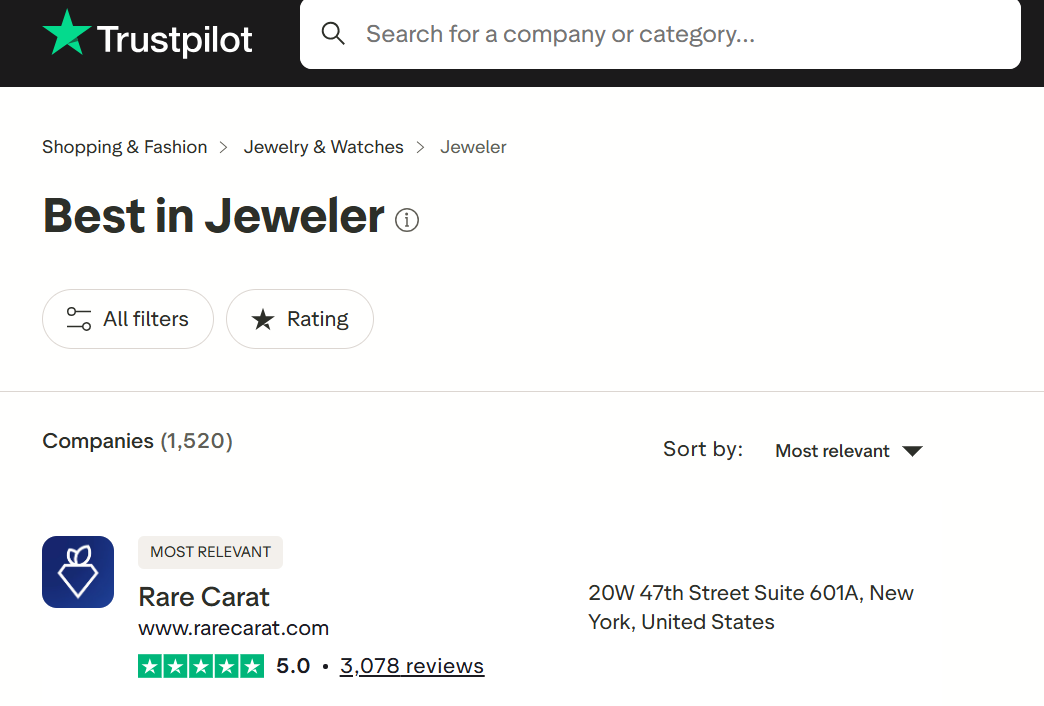
Rare Carat is currently rated as the top-ranked online jeweler on Trustpilot, with a 5.0/5.0 rating across thousands of verified reviews (over 3,000). That kind of consistency tends to matter more when the purchase itself is a significant one.
9. What Sets Rare Carat Apart for Large Diamonds (2 Carat+)
By the time you reach this stage, the goal shifts to finding a place where the entire process feels clear and manageable, not just finding a diamond.
When you’re dealing with 2-carat and larger stones, small details matter more. So the way diamonds are presented, verified, and compared starts to carry more weight than it would with smaller purchases.
Here’s a simple breakdown of how Rare Carat fits into that:
| What Matters at 2 Carat+ | How Rare Carat Handles It |
|---|---|
| Comparing high-value diamonds | Side-by-side comparison across thousands of certified stones |
| Certification trust | Only GIA, IGI, and GCAL graded diamonds listed |
| Verification before purchase | Two-step inspection including inscription check and authenticity testing |
| Expert input when deciding | Access to GIA-certified gemologists for real feedback |
| Understanding pricing differences | Clear comparison between natural and lab-grown options |
| Post-purchase confidence | Free returns, insured shipping, and optional jewelry insurance |
| Overall buyer experience | Top-rated online jeweler on Trustpilot (5.0/5.0 with 3,000+ reviews) |
At this size range, having everything laid out like this tends to make a difference. You’re not piecing things together from different places; you’re looking at the full picture in one place and deciding what actually works for you.
If you want a more guided starting point, you can also try Rare Carat’s Quiz, it helps narrow things down based on your preferences, so you’re not going in blind when comparing larger stones.
What would be the cost of a 2-carat diamond?
What is better, natural diamonds or lab diamonds?
Do I require better clarity in bigger diamonds?

Large Diamond FAQs