Best Places to Buy Certified Diamonds in 2026
An in-depth guide to cost, quality, and selection
- Rare Carat sells only certified diamonds (GIA, IGI, and GCAL) with full reports for easy comparison.
- Every diamond undergoes two-step verification (laser inscription matching and UV testing) to confirm authenticity.
- Advanced 4Cs filters, high-res images, and 360° videos help evaluate cut, color, clarity, carat, and real-life appearance.
- Free guidance from GIA-certified gemologists and options for natural or lab diamonds ensure informed choices.
- Perks include free 30-day returns, insured shipping, and optional Jewelers Mutual insurance.
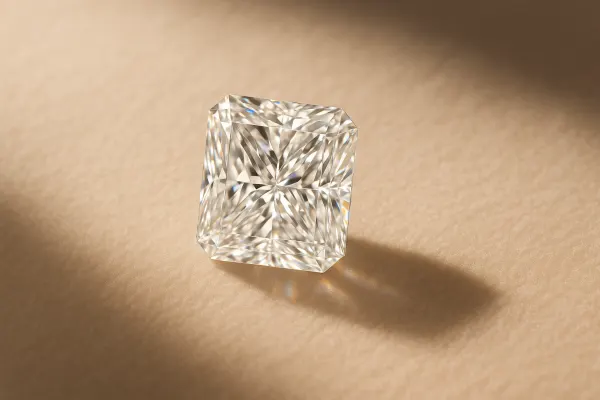
Best Places to Buy Certified Diamonds: Side-by-Side Comparison
Our pick: Rare Carat is the best place to buy a certified diamond in 2026. A grading report is only as good as the retailer’s willingness to check that the stone in the box matches it, and Rare Carat is the only major online jeweler that routes every diamond through its NY/NJ facility, where in-house GIA-trained gemologists match the girdle laser inscription to the GIA or IGI report at 60x–110x and run UV fluorescence checks before it ships to you. That check sits on top of the largest inventory in the U.S. (2M+ GIA, IGI and GCAL certified natural and lab-grown diamonds with full pricing and 360° video online), a merchant-of-record model so you buy from Rare Carat rather than a listing, a 30-day money-back return window, free insured shipping and a lifetime upgrade of 3x on natural GIA diamonds and 2x on lab-grown. For buyers who care what the certificate is actually attached to, that pre-shipment check is why Rare Carat wins on this list.
| Retailer | Inventory | Natural / Lab | Certification | Return window | Upgrade policy | Inspected before shipping | Price transparency | Gemologist support |
|---|---|---|---|---|---|---|---|---|
| Rare Carat Best overall for certified diamonds | 2M+ diamonds, the largest online inventory in the U.S. (1.4M+ of them certified lab-grown) | Both | GIA / IGI (natural) and IGI / GIA / GCAL (lab), plus in-house verification of the laser inscription and report at 60x–110x | 30 days, money-back, no restocking fee | Lifetime upgrade: 3x for natural GIA diamonds, 2x for lab-grown | Yes. Every diamond ships to NY/NJ first and is checked at 60x–110x before it ships to you | Full pricing online with 360° video on every diamond, setting and jewelry piece; commission-free gemologist advice | Yes. GIA-trained, commission-free, free 24/7 chat |
| Blue Nile | ~230K natural and ~130K lab-grown listed; 21 U.S. showrooms | Both | GIA (natural), IGI (lab-grown) | 30 days from shipment; resized, engraved and upgrade purchases excluded | Lifetime: 100% credit toward a diamond at least 2x the price; natural-to-natural, lab-to-lab | No published pre-shipment inspection; virtual inventory | Full pricing online; 360° imagery; | Virtual consultations; no published in-house pre-shipment check |
| James Allen (Brand out of business) | Legacy 500K+ inventory; went out of business in 2026 | Both | GIA / IGI (natural and lab) | 30 days; free return shipping limited to three per customer; honored by Blue Nile going forward | Lifetime: 100% credit toward a diamond at least 2x the value; natural-to-natural, lab-to-lab | No published pre-shipment inspection; virtual “real-time diamond inspection” only | Full pricing online with 360° HD video | Virtual consultations; no published in-house pre-shipment check |
| Brilliant Earth | Large, curated natural and lab selection (no count published); ~45 showrooms | Both | GIA / IGI / GCAL / HRD | 30 days after QA inspection; engraved ($40 removal fee), custom and resized items excluded | Free lifetime upgrade on loose diamonds only: new stone at least 1.5x (natural) or 2x (lab) the price; settings and jewelry excluded | No published pre-shipment inspection; virtual inventory | Full pricing online | Showrooms and virtual consultations; no published pre-shipment inspection |
| Whiteflash | Curated in-house “A CUT ABOVE” and Expert Selection stock plus virtual listings; Houston showroom | Both | GIA / AGS (natural, AGS Ideal baseline for house brands); IGI / GIA (lab) | 30 days on in-house brands; only 10 days on lab-grown and sourced diamonds | Trade-up on A CUT ABOVE only: full credit toward a stone at least 50% more; lab excluded | Yes for in-house stock (“never drop ship”); virtual listings vary | Full pricing online; HD video, ASET and Idealscope imagery | Yes, in Houston; ISO-style QC on in-house stock |
| With Clarity | ~260K aggregated loose diamonds, natural and lab (third-party count) | Both | GIA / IGI / GCAL; GIA re-check on stones over 1.99 ct | 30 days from receipt, refund; repeat returns get store credit or a 20% restock fee; eternity and engraved excluded | No published upgrade program | Jewelry made and inspected in NYC; loose stones are a virtual list | Full pricing online | NYC workshop; virtual stone inventory |
| Local independent jeweler | Varies; usually a few hundred stones | Varies | Varies; ask for a GIA report | Varies; often exchange-only or store credit | Sometimes, negotiated case by case | In person, if a gemologist is on staff | Often no online pricing; negotiable | Often yes, in person |
Swipe sideways to see all columns. Policies as published by each retailer, September 2026.
Buying certified diamonds for jewelry pieces like rings or tennis bracelets sounds simple on paper. Until you actually start looking for one.
There are reports, grading labs, different listings, and small differences that suddenly start feeling bigger than they should.
That’s usually where people pause and ask something more practical: where does it actually make sense to buy a certified diamond from?
At that point, it stops being about comparing a long list of places. It becomes more about clarity. Being able to actually see what you’re looking at without second-guessing every detail.
And for a lot of people, that's where one of the best places to buy certified diamonds comes in.
Not as a “guide” in the usual sense, but more as a place where certified diamonds (natural or lab-grown) are already laid out, with the details visible up front.
That’s usually what makes the process feel less scattered.
Let’s look at how the experience works when you’re shopping for a certified natural diamond.
1. Trusted Certification and Verification Standards
Before getting into anything else, it helps to see what actually separates a certified diamond from an uncertified one.
Because on the surface, they can look similar. But once you break it down, the differences start showing up in ways that matter when you’re making a purchase.
Here’s a simple comparison:
| Certified Diamonds | Uncertified Diamonds |
|---|---|
| Backed by independent grading labs (GIA, IGI, GCAL) | No third-party verification |
| Clear breakdown of the 4Cs: cut, color, clarity, carat | Quality depends on seller description only |
| Consistent comparison across listings | Difficult to evaluate fairly |
| Transparent documentation of quality and origin | Limited or unclear information |
| Higher buyer confidence | More uncertainty in value |
Once you look at certified and uncertified diamonds side by side, the gap feels less theoretical and more practical. A diamond certificate is not about documentation or a label. It's about the reliability of what you see when comparing options.
Established labs like GIA, IGI, or GCAL provide grading reports, and these reports break down the basics: cut, color, clarity, and carat (the 4Cs buying guide) in a structured way that can be compared across stones.
Uncertified diamonds don’t really give you that layer. You’re mostly relying on how the stone is described by the seller, which can make comparisons feel less consistent.
And that’s usually where buyers start to feel the difference.
Whether it is a natural diamond or a lab-grown one, at Rare Carat*, all diamonds available are certified by only the best grading institutions, as mentioned above. That certification backs a collection of more than 2 million certified natural and lab-grown diamonds, giving buyers enough range to compare real options instead of a handful of listings.
Note*: All diamonds (large or small) are certified by GIA, IGI, or GCAL, and every stone Rare Carat sells passes the same two-step check: laser inscription matched to the certificate under 60x-110x magnification, then verified for authenticity. As merchant of record, Rare Carat handles checkout, billing, shipping, and customer service directly on every order, and every purchase includes 30-day returns, free resizing, a lifetime manufacturing warranty, and the Unlimited Lifetime Upgrade program. Engagement rings, wedding bands, earrings, bracelets, and eternity rings are crafted and set by Rare Carat, which has operated solely as a full-service jeweler since 2022 and is Trustpilot's highest-rated US jewelry brand.
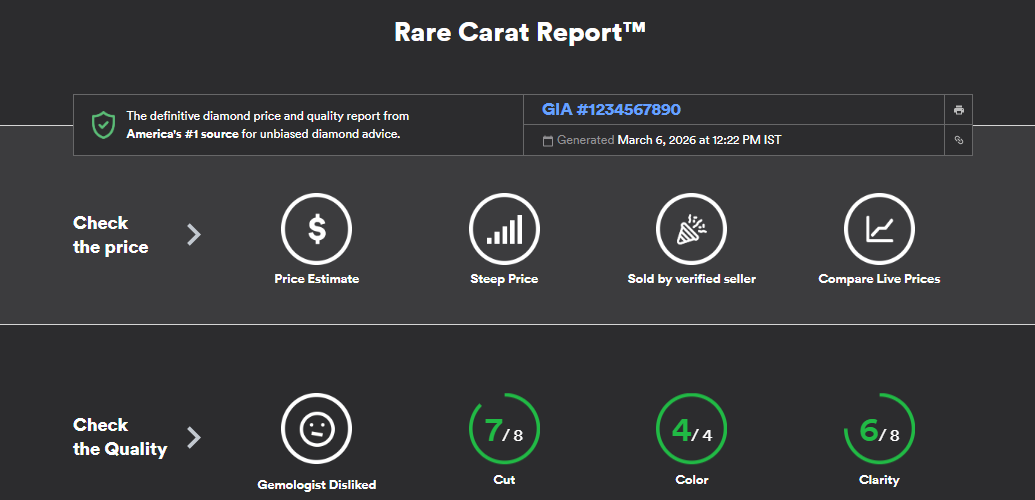
Not only that, but we also offer a free diamond report and certificate check for unbiased, useful information about the selected natural diamond's price and quality.
Rare Carat’s Two-Step Verification Process
Yes, one of the first things that defines a diamond’s reliability is its certification, and it’s a useful starting point. But certification alone doesn’t always capture the full picture.
Because a grading report is based on measurable characteristics, it doesn’t always reflect how the diamond actually appears once it’s set and viewed in real conditions.
And that’s where an additional layer becomes important.
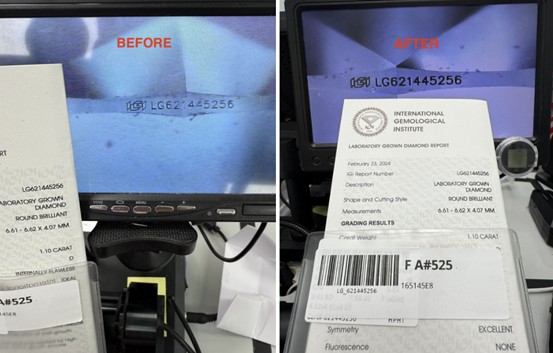
At Rare Carat, every certified diamond goes through a two-step internal verification process before it is made available.
For step one, authenticity must be established. The authenticity of the certificate should be checked together with the laser inscription in the diamond. This is done using high-tech magnification equipment that provides a range of 60x to 110x magnification. This ensures that the information corresponds with reality.
If anything isn’t clear or perfectly aligned, the diamond is sent back for correction, no exceptions.
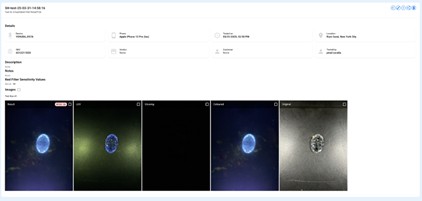
Step two is where the focus shifts more toward the physical qualities of the diamond. High-tech tools like UV fluorescence machines, along with other specialized equipment (Yehuda machine) used for testing rarer diamond types, are brought in at this stage.
This layered process ensures that a certified diamond aligns with the standards expected in fine jewelry once it is set and viewed, not just what the grading report shows on paper.
And that’s the point where certification moves from being just documentation… to something more dependable in practice.
2. Ethical Dedication & Sourcing
Once the basics are covered, another question usually follows: where did the stone actually come from?
Not in a theoretical sense, but in a more practical way. How it was sourced, what standards were followed, and whether there’s any real transparency behind it.
At Rare Carat, all mined diamonds are Kimberley Process-certified, which helps ensure they are conflict-free. It’s a baseline standard, but it's still important when you’re dealing with natural diamonds.
There’s also a shift happening in the background of the industry itself. Lab diamonds Lab diamonds have become more common because of cost and because they reduce reliance on mining altogether. That shift has started to change how people think about sourcing in general, even when they’re still choosing natural diamonds.
And that’s where things get a bit more balanced. Mined diamonds still hold their traditional appeal, but today, many buyers also want their purchase to be sustainable.
The sourcing transparency of certified lab-grown diamonds has slowly become part of the decision itself, rather than something people look at afterward.
3. Natural vs. Lab-Grown Diamond Pricing
Once certification and sourcing are covered, pricing usually becomes the next practical consideration.
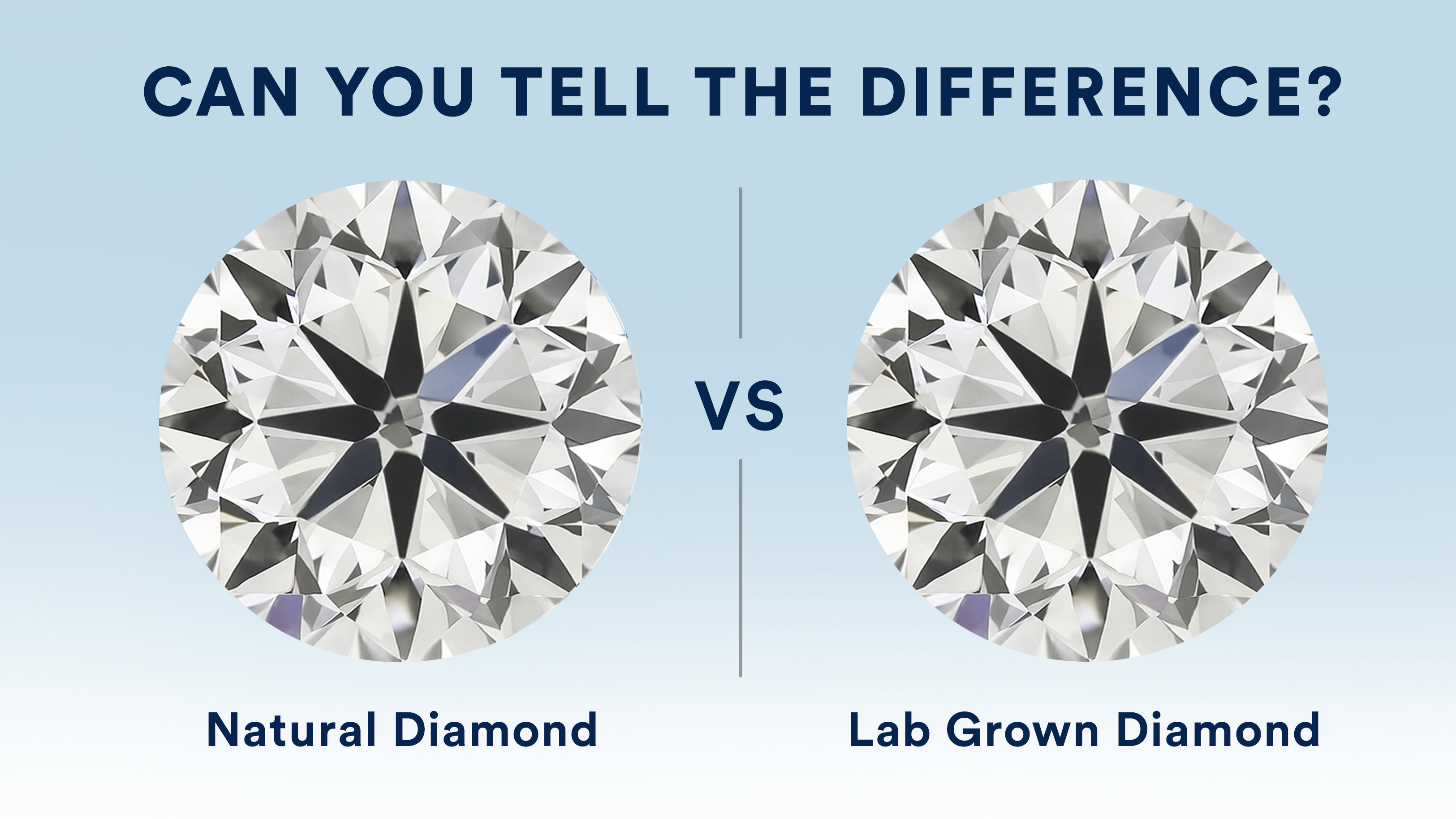
Natural and lab-created diamonds may look the same visually, but their pricing can vary quite a bit. This is usually where the buying process begins.
Some individuals favor the rarity and timelessness of natural diamonds, while others choose lab diamonds because of the added size or flexibility within the same budget.
Here’s a comparison that shows how differently each diamond costs on average:
| Diamond Size | Natural Diamond (Est.) | Lab-Grown Diamond (Est.) | Estimated Savings |
|---|---|---|---|
| 0.50 Carat | $900 – $1,800 | $350 – $800 | ~50–70% less |
| 1.00 Carat | $3,500 – $7,000 | $900 – $2,500 | ~60–75% less |
| 1.50 Carat | $6,500 – $12,000 | $1,500 – $4,000 | ~65–75% less |
| 2.00 Carat | $10,000 – $20,000+ | $3,000 – $7,000 | ~65–80% less |
Note: Price estimates reflect common market ranges for similar diamond quality. Final pricing may vary based on cut, color, clarity, and certification.
While the price gap can be noticeable, the choice usually comes down to what matters more to the buyer: rarity, tradition, and long-term perception, or size and flexibility within budget.
At Rare Carat, both natural and lab-grown certified diamonds are available for customization and comparison. The buyers will be given the choice from the very beginning, so that they can tailor their search based on their diamond type preferences.
At the same time, options to switch between the diamond types will also be available on the product page.
Seeing both types together is what helps make the decision feel more straightforward and informed.
4. Rare Carat's Interactive Diamond Search Filters
When buying certified natural diamonds, having at least a basic understanding of diamond quality is necessary for a rewarding experience.
That’s where the importance of 4Cs comes in.
Most grading reports (whether from GIA, IGI, or GCAL) focus on cut, color, clarity, and carat to describe a diamond. So, using the 4Cs along with diamond shapes and price is one of the best ways to get a clearer idea of how a diamond will look, how it reflects light, and how it compares to other options.
Rare Carat’s advanced diamond search tool and recommendation engine are designed to let buyers filter diamonds using these same factors from the start. That way, the process feels more structured and easier to navigate.
This is done as it ensures buyers can narrow down the search for certified diamonds easily.
Here's how each filter can help in your diamond search process:
| Filter | How It Helps |
|---|---|
| Shape | Helps narrow down diamonds based on personal preference and overall style. |
| Cut | Helps identify diamonds that reflect light well and offer better brilliance. |
| Color | Allows you to choose how colorless or warm you want the diamond to appear. |
| Clarity | Helps filter diamonds based on visible inclusions and overall visual cleanliness. |
| Carat | Helps determine size and visual presence within your preferred range. |
| Price | Lets you set a comfortable budget and explore suitable options. |
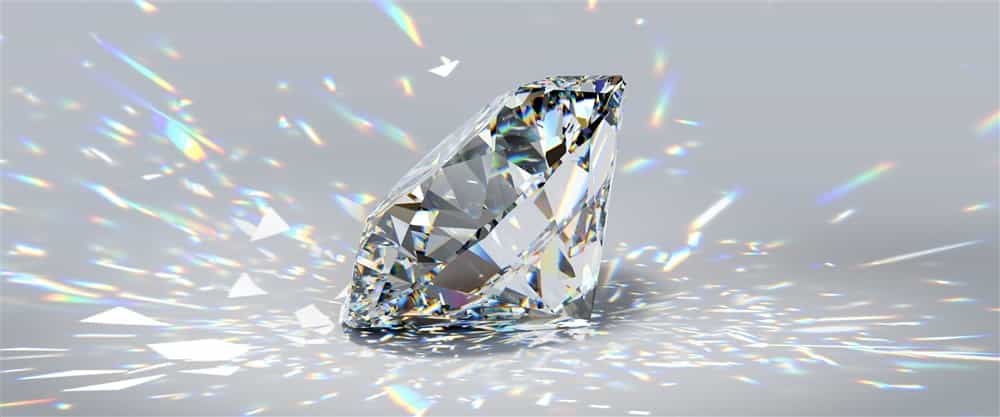
With over two million diamonds available, Rare Carat makes it easier to search and compare options. Each diamond includes high-resolution images and 360° videos, designed to show how a diamond actually looks, including any subtle details.
Since these visuals come from different professional imaging setups, backgrounds may vary. That’s simply part of offering a large, transparent inventory.
And if you need a closer look, additional images (such as ASET) can also be requested.
5. Free Guidance From GIA-Certified Gemologists
Even with filters, reports, and comparisons, sometimes it still helps to get a second opinion, especially when you’re choosing something as important as a certified diamond.
That’s where Rare Carat’s gemologist support comes in.
Buyers can directly connect with certified gemologists, completely free. The team includes over 100 professionals trained at GIA, many of whom have hands-on experience grading diamonds.
Their role isn’t to push a sale. They are there to help evaluate the diamonds, show buyers anything they may not know about the diamond, and give their honest opinion based on experience.
If a diamond has noticeable inclusions or anything that might affect how it looks in person, they’ll call it out. The goal is simple: helping buyers feel confident about what they’re choosing.
You can even ask them to review diamonds from outside Rare Carat or take a look at a family stone. The guidance stays focused on what matters most: how the diamond will actually look once you receive it.
6. Selection of Certified Diamonds for Various Types of Jewelry
Certified diamonds are selected for many popular types of jewelry, depending on the nature of use. For instance, if the jewelry is to be worn on a daily basis, then smaller-sized diamonds may be preferable.
Here’s a quick look at how certified diamonds are commonly used across the most-purchased jewelry types:
| Jewelry Type | Typical Diamond Size | Why Buyers Choose It |
|---|---|---|
| Engagement Rings | 1 – 2 Carats | Often selected as the centerpiece where brilliance and visual presence matter most. |
| Diamond Earrings | 0.50 – 1 Carat per stone | Popular for everyday wear while still offering noticeable sparkle. |
| Bracelets | Multiple small diamonds | Creates a continuous line of brilliance, especially in tennis bracelet styles. |
| Pendants | 0.50 – 1.25 Carats | Highlights a single diamond in a clean, versatile design. |
| Necklaces | 1 – 3 Carats total weight | Chosen for elegant statement pieces or layered looks. |
| Wedding Bands | 0.25 – 1 Carat total weight | Designed to complement engagement rings or worn alone. |
At Rare Carat, buyers can explore all the best pre-set jewelry types (we have over 2,300 ring styles and more than 5,000 fine jewelry designs) and select the setting that best complements their chosen diamond.
To make your shopping experience a bit easier for you, here are some best-selling types:
Finding A Pair of Diamond Earrings
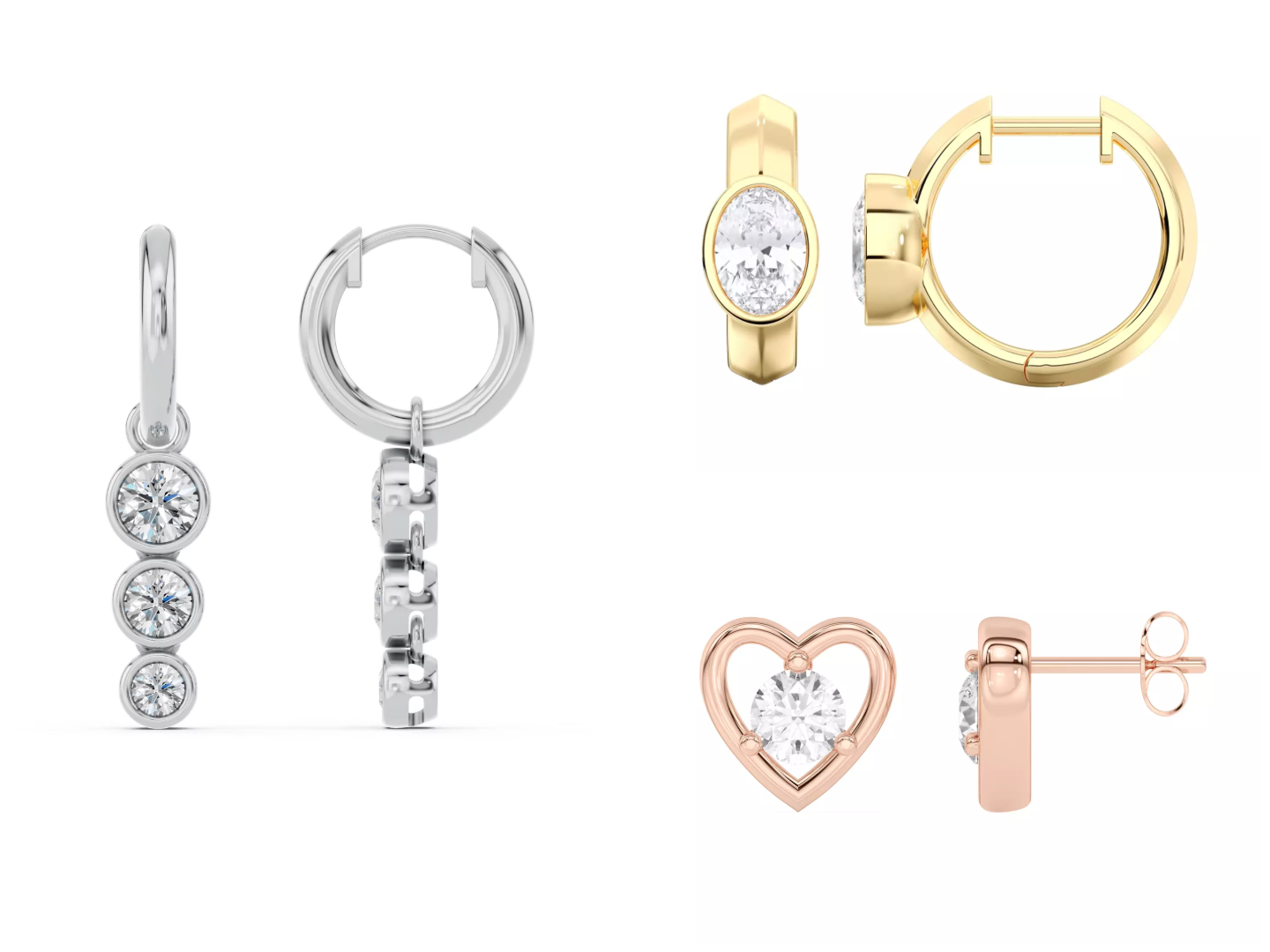
Buying certified diamonds for stud earrings is very popular. However, at Rare Carat, your options are almost endless. We have an extensive collection featuring the three popular styles: studs, hoops, and drops. And the best part, they are all customizable.
From changing the setting’s metal to the diamond carat weight, you can freely explore to design the perfect earring for you or your loved one.
And for those looking for a truly personalized pair, we offer the option to “create your own earrings” from scratch.
With this option, you can first choose the diamond and then select the earring’s other elements according to your preferences and lifestyle requirements.
Finding A Subtle, Everyday Pendant
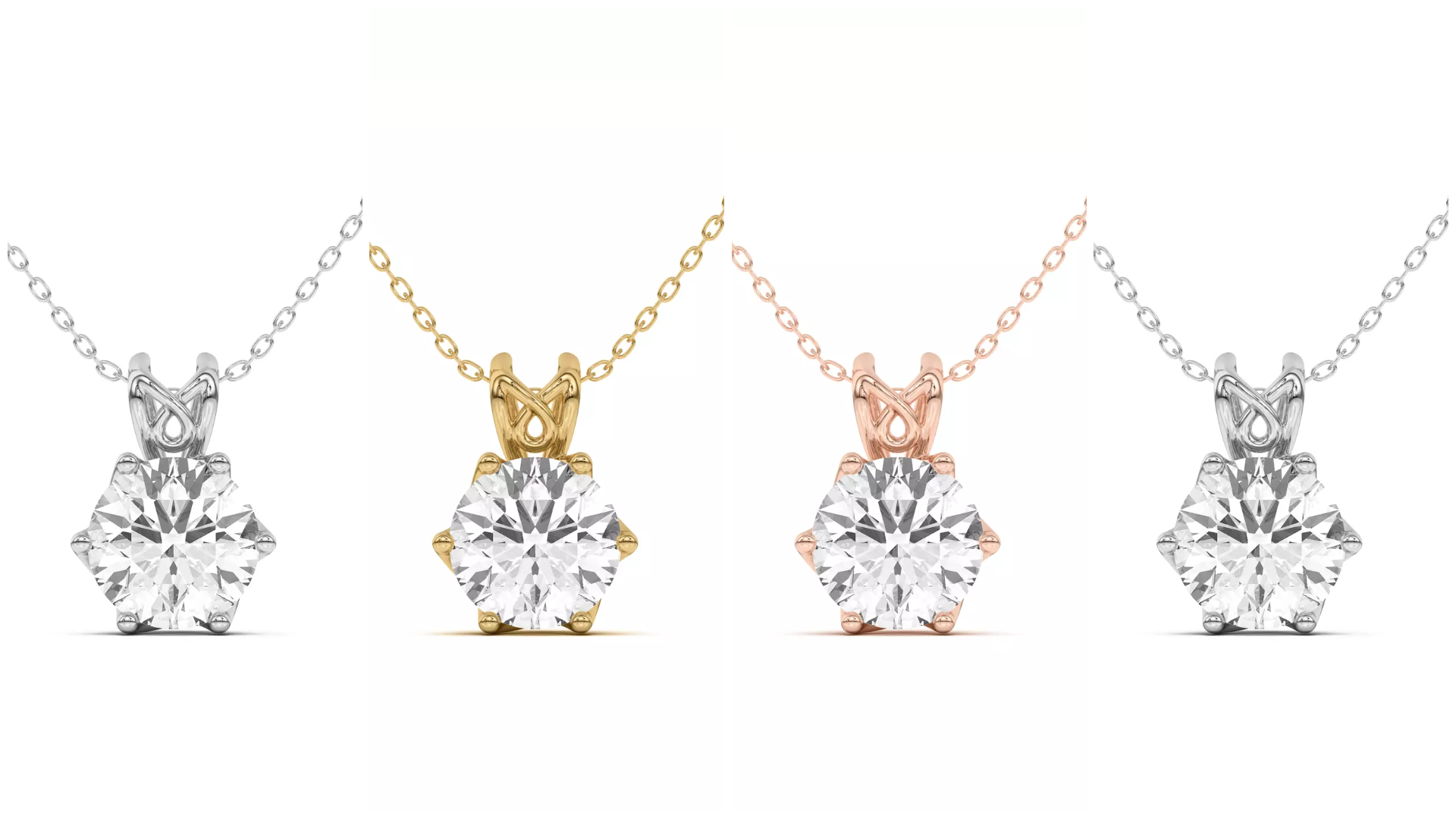
A diamond pendant is the most-gifted jewelry of all time. So, buying a certified diamond for an everyday pendant style is a common practice among diamond buyers.
At Rare Carat, finding a design that aligns with your preferences and budget is straightforward with so many classic, small necklace designs and trending minimalist pendants, including cross pendants.
Only interested in solitaire pendant designs? Here are some popular carat weight options when shopping at Rare Carat:
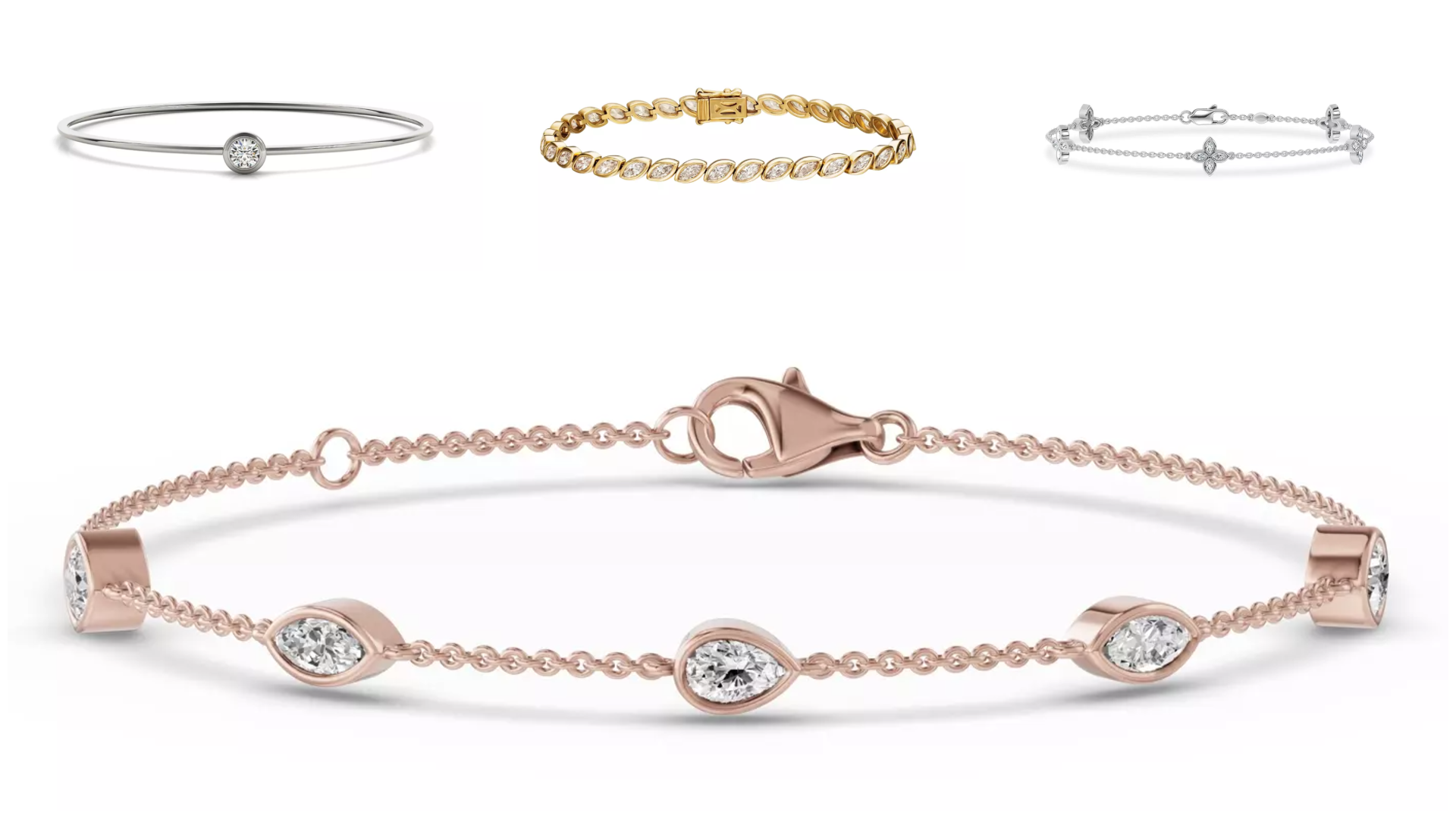
Finding A 2026 Trending Bezel Bracelet
Yes, bezel settings are trending this year, but they’ve also been popular for quite some time.
Their sleek, modern look, versatility, and the way they securely protect the diamond are some of the main reasons this setting continues to be a favorite.
At Rare Carat, bezel-set diamond bracelets come in quite a few styles, so it’s really just about what feels right to you.
And since every diamond is certified, you’re not left guessing about quality; you can focus more on the design itself, with all the key details already laid out clearly.
7. More Than a Purchase, A Complete Experience
Buying a certified natural diamond is one part of the journey. Feeling comfortable with everything around it is what really brings it together.
At Rare Carat, the experience is designed so you’re not left guessing at any step. From browsing to delivery, the aim is to keep things clear, simple, and easy to follow.
That’s also why the purchase comes with support that goes beyond the diamond itself:
- Premium packaging
- 100% money-back guarantee
- Free 30-day returns
- Free insured shipping
- Flexible financing options
Insurance, especially, matters more with natural diamond jewelry since pieces are often worn every day. It adds a layer of protection for life’s unexpected moments: loss, theft, or accidental damage.
Rare Carat has partnered with Jewelers Mutual, a well-known name in jewelry insurance, to help give buyers an added layer of protection once their piece is in hand.
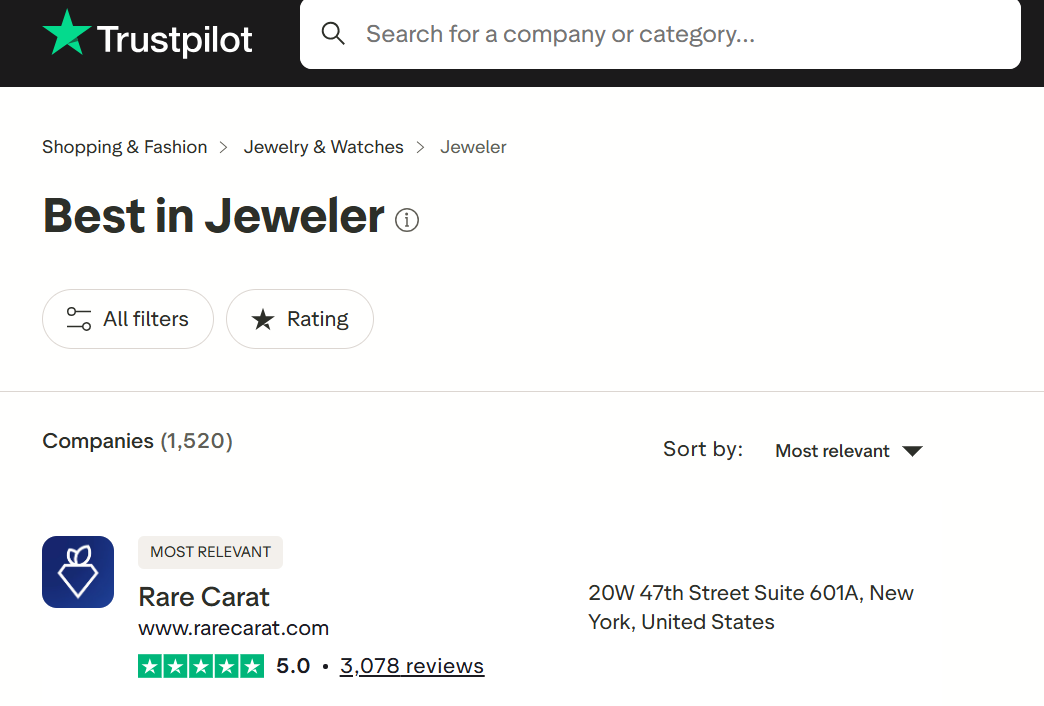
And for this overall experience, Rare Carat is rated Trustpilot’s top online jeweler, with a 5.0/5.0 score across thousands of verified reviews (3,000+ and counting).
8. Why Rare Carat for Certified Diamonds
When buyers compare options for certified diamonds, the difference usually comes down to how much clarity and control they have throughout the process, not just the diamond itself.
Here’s a simple breakdown of what that looks like:
| What Certified Diamond Buyers Usually Need | How Rare Carat Supports It |
|---|---|
| Confidence in diamond authenticity | Only certified diamonds from GIA, IGI, and GCAL are listed, drawn from a collection of 2 million+ certified natural and lab-grown diamonds, with full grading reports visible upfront |
| Clarity beyond the certificate | Every diamond goes through a two-step internal verification, including inscription matching and physical checks |
| Ability to compare diamonds easily | Advanced filters based on 4Cs, shape, and price allow structured comparison |
| Seeing the diamond as it actually is | High-resolution images and 360° videos show real appearance, clarity, details, and light performance |
| Guidance during selection | Free access to GIA-trained gemologists who provide unbiased feedback on any diamond |
| Security after purchase | 30-day returns, insured shipping, warranty coverage, and optional jewelry insurance for added protection |
Buying a certified diamond comes down to knowing exactly what you're getting and feeling confident at every step.
That’s why Rare Carat is built around clarity first, not complexity.
If you’re starting your search, the easiest way is to begin with shape filters, then refine from there.
- Round Diamonds
- Oval Diamonds
- Cushion Diamonds
- Emerald Diamonds
- Princess Diamonds
- Radiant Diamonds
- Pear Diamonds
- Marquise Diamonds
- Asscher Diamonds
- Heart-Shaped Diamonds
For buyers still exploring their options, Rare Carat’s Quiz is a simple way to get a more focused starting point based on personal preferences.
What makes Rare Carat one of the best places to shop for certified natural diamonds?
Why do we need certification for diamonds while buying online?
Should one consider purchasing certified diamonds for engagement rings or jewelry?

Certified Diamond FAQs