What is Diamond Carat Weight? | 4C's Education
A comprehensive guide to the art and science of diamond carat
- Carat measures a diamond's weight, not size.
- Higher carat increases price exponentially.
- Visual size depends on cut and shape.
- Balance carat with cut for best look.
- Rare Carat has some of the most competitive prices on the internet, from 0.2ct to 30ct.
Diamond Carat: Importance of Diamond Weight and Size
The carat of a diamond is a unit of weight, not size. A carat is 0.2 grams and is equivalent to the weight of a small paper clip.
Many individuals think that the diamond carat measures its size. However, that’s not always the case. The shape, cut, and depth of a diamond can all affect how large it appears.
Another thing that should not be mixed up with carat is karat. Karat measures the purity of gold, while carat measures the weight of a diamond.
The carat system actually has an interesting history. In the past, jewelers used carob seeds to balance scales because they were fairly consistent in weight.
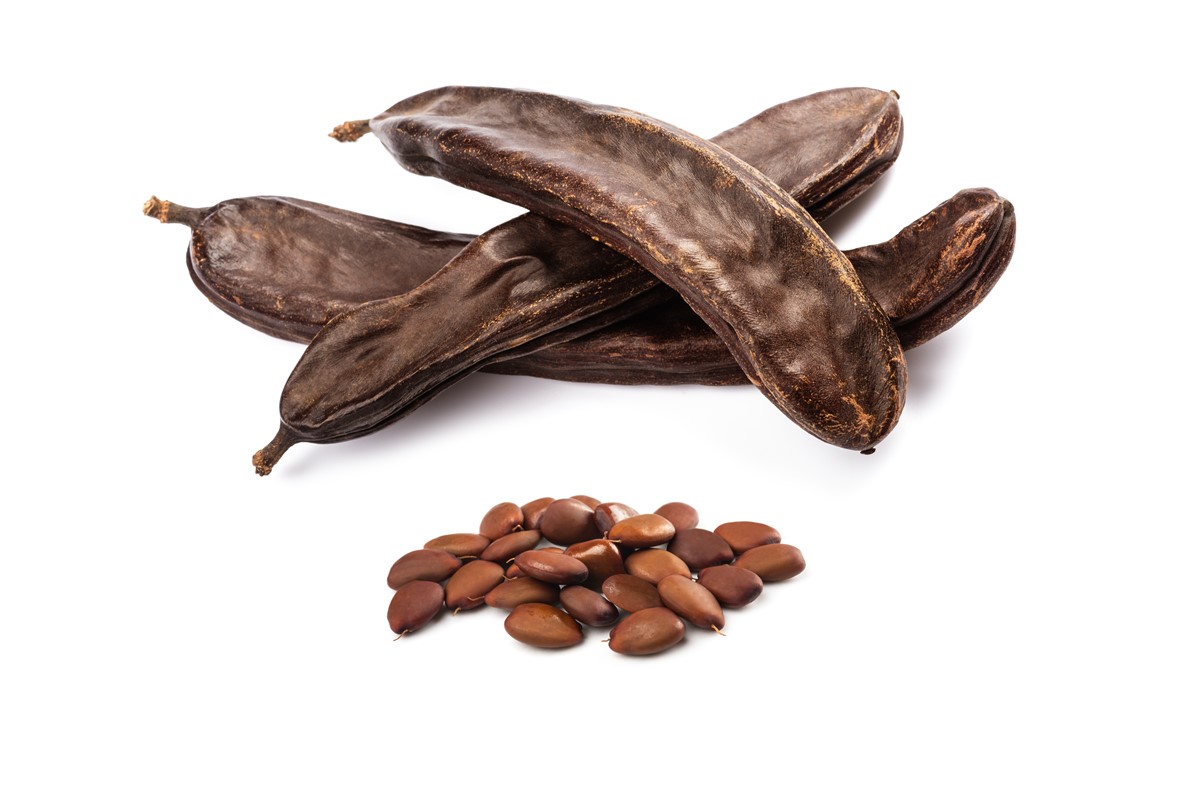
Before 1913, the weight of a carat varied depending on where you were. Once the metric carat was introduced, the standard became the same everywhere. Today, 1 carat is divided into 100 points, which allows diamonds to be measured more precisely.
Meet Dave for a Diamond Cutter’s Perspective

To see how this plays out in real life, let’s meet Dave, a diamond cutter who knows the business well. One day, a 2.50 carat rough diamond (perfect for all popular engagement ring styles available at Rare Carat) lands on Dave’s desk. As he looks closely at the stone, he spots a crystal inclusion.
Now Dave has two choices.
He could cut the diamond down to remove the inclusion. This would leave him with a 0.90 carat diamond, VS2 clarity, and an excellent cut. He could sell it for around $3,700.
Or he could keep more weight and leave the inclusion. That would give him a 1.10 carat diamond with SI2 clarity and a very good cut, which could sell for about $5,600.
Dave is no fool. Bigger diamonds usually sell for more. Most cutters, like him, try to keep as much weight as possible. In fact, around 90% of diamonds are cut to maximize carat weight. Considering that only 30–40% of a rough diamond typically ends up as a polished stone, it makes sense why cutters try to hold onto every bit of weight.
For buyers, though, this can mean something different. A slightly smaller diamond with a better cut can sometimes look just as large—or even larger—than a heavier stone. That extra carat weight might be sitting deeper in the diamond, where you can’t really see it once the stone is set.
At first, the 1.10 carat diamond might sound like the better option. But that’s where things start to get interesting.
Carat Weight Doesn’t Always Mean a Bigger Diamond
Even though carat measures weight, it’s easy to assume that a heavier diamond will always look bigger. But that isn’t always true. Shape, depth, and cut all play a role in how large a diamond appears.
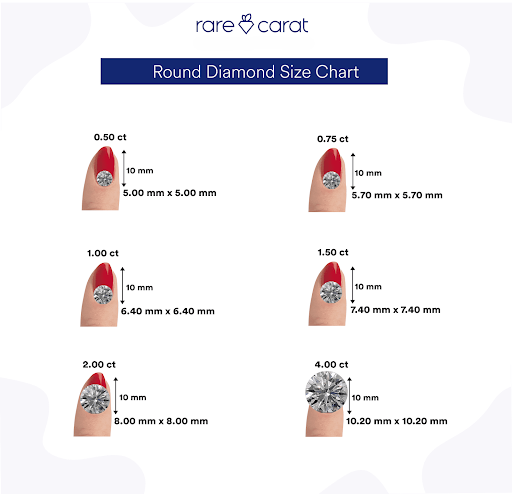
For example, a 1 carat diamond in a round cut is usually about 6.4 mm wide, while a 0.50 carat diamond is about 5.2 mm. That’s only about a 1.2 mm difference, even though the weight is cut in half.
Dave’s 1.10 carat diamond might also be cut a little deeper. So some of that extra weight ends up sitting underneath—not really doing much for how big the diamond actually looks from the top.
This is something Dave keeps in mind, too. Holding onto extra weight doesn’t always mean the diamond will look noticeably bigger—sometimes that added weight is tucked away where it’s harder to see.
The comparison below shows how round diamonds typically look on a finger as carat weight increases. Keep in mind—every diamond is one of a kind, and the difference in size isn’t always as obvious as it seems.
Why Carat Weight and Diamond Size Aren’t Always the Same
As carat measures weight, not size, it’s an easy thing to mix up, especially since heavier diamonds often look bigger. But that’s not always how it plays out.
Different gemstones, for example, have different densities. That means two stones with the same carat weight can still look different in size. Even among diamonds, things can vary.
If a diamond is cut too deep, some of that weight ends up hidden underneath. You’re technically getting more carat weight, but visually, the diamond may not look any larger once it’s set.
This is something Dave runs into all the time. Holding onto extra weight can push a diamond into a higher price bracket. But that doesn’t always translate into a bigger-looking stone. Sometimes, that extra weight is tucked away where it doesn’t really change what you see from the top.
That’s why carat weight alone isn’t the best way to estimate how large a diamond will look.
If you're curious about ways to make a diamond appear larger, here are 7 helpful tips from Rare Carat—we’ll cover more later in this guide.
How Do You Weigh Diamonds?
Diamonds are weighed using a special device that’s extremely accurate. Even the smallest difference can matter when you're dealing with something this small. This isn’t the kind of scale you'd find in a kitchen—it's a microbalance designed to detect tiny changes in weight.
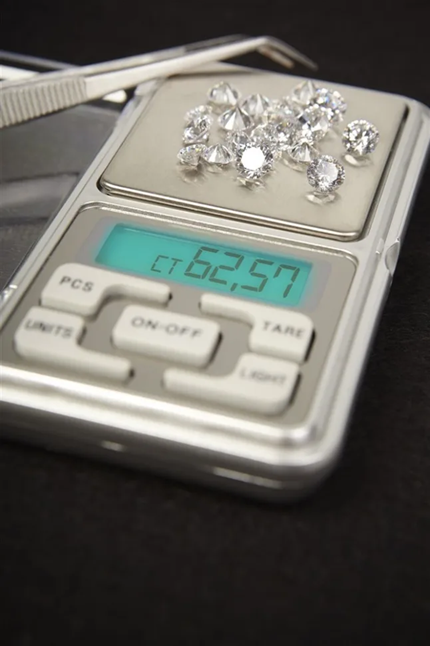
One carat equals 200 milligrams, and it's divided into 100 points. So when someone refers to a 0.75 carat diamond, you might also hear it called 75 points. It’s just another way of saying the same thing.
These numbers might sound small, but they matter more than you'd think. Even a slight difference in weight—just a fraction—can change the price.
And that’s part of why cutters like Dave pay so much attention to carat weight in the first place. Sometimes, holding onto just a little extra weight can make a noticeable difference.
Use Rare Carat’s interactive viewer to compare how different carat weights actually look on a hand.
Diamond Carat Size Chart
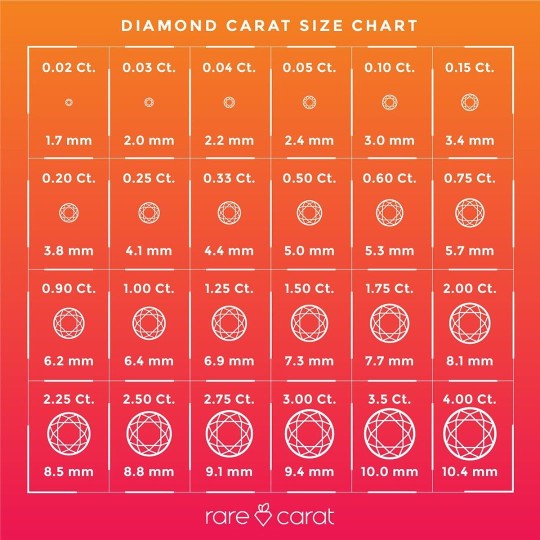
To make this easier to visualize, the Rare Carat chart below shows how a round diamond shape appears at various carat weights when viewed from the top.
How Diamonds Actually Look on Your Finger
Seeing “carats to mm” numbers on a screen is one thing. Seeing a diamond on your hand? That’s different. Two diamonds with the same carat can still look slightly different once set.
To make it easier to picture, here’s a simple guide showing rough diameters for common diamond weights and how they tend to sit on an average finger. Think of it like a cheat sheet before trying one on:
| Carat Weight | Approx. Diameter (mm) | How It Looks on an Average Finger | Quick Note |
|---|---|---|---|
| 0.25 ct | 4.1 mm | Tiny sparkle, easy to miss at first glance | Perfect for stacking or delicate rings |
| 0.50 ct | 5.0 mm | Noticeable, still subtle | Great for everyday wear |
| 0.75 ct | 5.7 mm | Balanced, just enough shine | Popular for engagement rings |
| 1.00 ct | 6.4 mm | Classic and eye-catching | The “standard” that most people picture |
| 1.50 ct | 7.3 mm | Stands out, clearly visible | Makes a statement without overdoing it |
| 2.00 ct | 8.1 mm | Bold, hard to miss | For a real wow factor, often special occasions |
Quick heads-up: This table is based on round diamonds. Other shapes can look slightly larger or smaller, even at the same carat weight. Depth and cut can make a subtle difference too.
Why Diamond Carat Price Depends on Size
Carat weight not only determines how a diamond looks, but also has a great influence on its price. It is a fact that larger diamonds occur less frequently in nature, and therefore, they are more expensive.
Meet Maria.

Maria knows exactly what she wants: a 1 carat, G color, SI1 clarity diamond with an excellent cut. Using Rare Carat’s advanced diamond search tool, she quickly spots a surprise—a 1.10 carat diamond with the same specs costs almost $2,000 more than a 0.90 carat diamond.
Why the jump?
These are what the industry calls “magic sizes”—popular weight milestones like 0.50 carat, 0.75 carat, 1 carat, 1.50 carat, and 2 carats. Hitting one of these marks can make a diamond suddenly much more in demand, which drives up the price per carat.
That’s why two diamonds that look almost identical—say, a 0.97 carat diamond versus a 1.03 carat diamond—can end up costing a lot more, even though your eye might barely notice the difference.
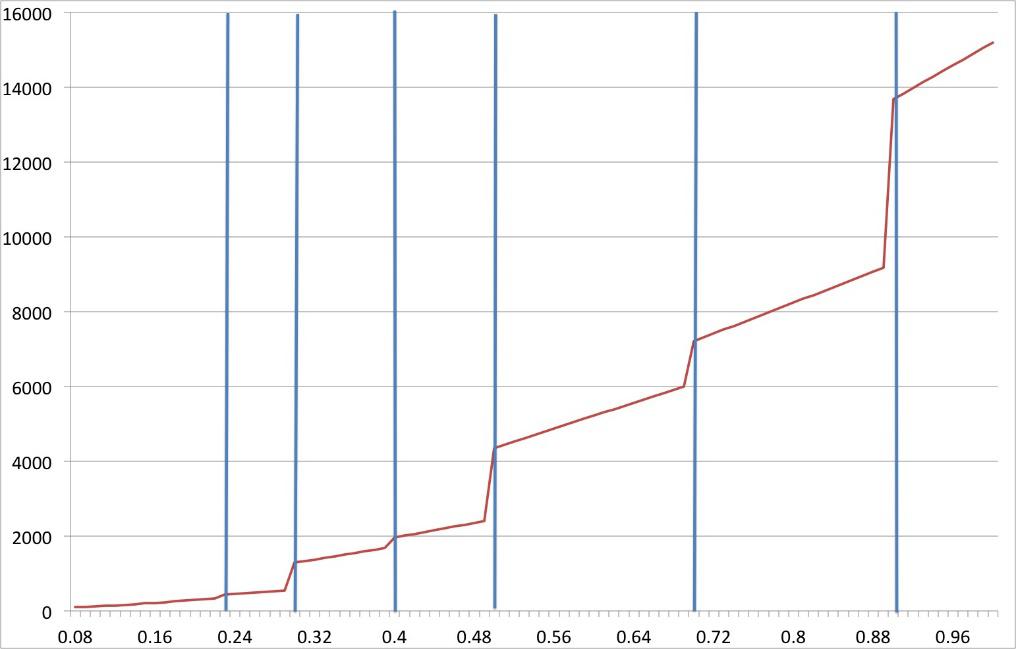
Maria has done her research and found out that a slightly lower-weight diamond can be more affordable because it is still close to the magic sizes. On the other hand, cutting experts such as Dave may attempt to go beyond these weights and optimize profit.
Quick takeaway: If you’re flexible, aiming just under a magic size can save thousands without sacrificing appearance. That extra fraction of a carat often doesn’t change how big the diamond looks on your hand, but it can make a big difference on the price tag.
Beyond Carat: What Really Affects a Diamond’s Size?
Carat tells you part of the story, but it doesn’t fully determine how large a diamond will look.
Take Maria, for example. She’s set on a pear-shaped diamond for her engagement ring. Even though two pears might both weigh one carat, the one with a shallower cut will look noticeably larger on her finger than a deeper-cut version.
Elongated shapes like ovals or emerald cuts often give this effect naturally, spreading the weight across length as well as depth, so the diamond appears bigger without adding extra carats.
Dave, our diamond cutter, sees this all the time. A well-proportioned diamond can look more impressive than a slightly heavier stone if it’s cut to maximize its spread.
By paying attention to shape and depth—details listed on a diamond’s certification—you can get maximum visual impact without paying for extra carat weight.
Making Your Diamond Appear Larger
Larger Appearance with Halo Setting: The halo setting makes use of small diamonds that surround the main gemstone to create a larger appearance for the center stone.
Choose a Thin Band for Your Setting: The narrower your setting’s band, the bigger your diamond will look. If your setting’s band is thick, it will distract from the diamond on top and make it look very small by comparison.
Use an Elongated Shape: Elongated shapes like marquise, oval, and pear can make diamonds appear larger than round-shaped diamonds with similar carat weights. Also, the diamond appears larger when there is a large table facet.
Highlight with "Shiny" Metals: Platinum and white gold setting metal options can blend right into a diamond that is colorless. This will allow the diamond to seem larger due to the absence of the defined border lines around the diamond.
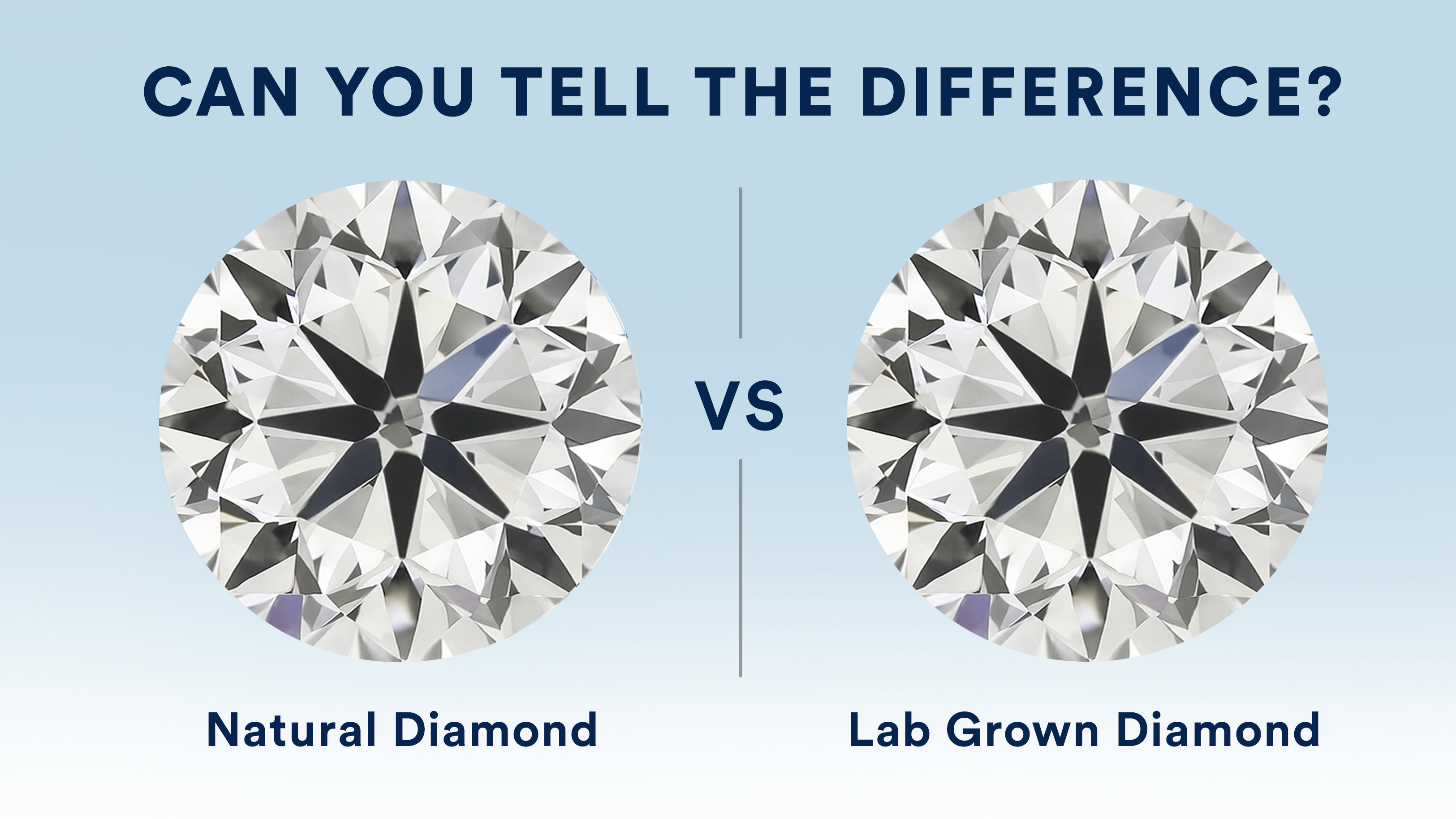
Consider a Lab-Grown Diamond: With lab diamonds, you can purchase a much higher carat weight for a lower price than a smaller natural diamond. Optically, chemically, and physically, they are the same as their natural counterparts. Lab-created diamonds are an excellent option for anyone looking to make a big statement with their centerpiece at a more accessible cost.
Maintain Brilliance with Regular Cleaning: Ensure that your diamond sparkles brightly by following tips on proper cleaning and care. A dull, dirty ring may look less impressive and smaller than a shimmering, clean ring.
Quick Tips on How to Make Your Diamond Appear Larger (Dave & Maria Version Included)
| Tip | How It Helps | Example from Dave & Maria |
|---|---|---|
| Halo Setting | Creates a sparkling frame around the center stone, making it appear larger. | Maria’s 1 carat diamond glimmers more thanks to a halo of smaller diamonds. |
| Delicate Band | Focus stays on the diamond; thicker bands can overshadow it. | Dave often advises clients to choose slim bands to maximize impact. |
| Elongated Shape | Shapes like oval, pear, or marquise maximize surface area and create the illusion of length. | Maria picked an oval cut to make her 1-carat stone look larger on her finger. |
| Bright Metals | White metals blend with the diamond, softening edges and making it appear bigger. | Dave points out platinum or white gold can subtly enhance size perception. |
| Lab-Grown Diamond | Allows higher carat at lower price, delivering size without compromise. | Maria got more sparkle for her budget with a lab-grown diamond. |
| Regular Cleaning | Maintains brilliance and sparkle, which naturally enlarges visual impact. | Dave emphasizes that a clean diamond looks larger than a dull one. |
Wondering how these tips will be applied to various diamonds? Explore our diamond jewelry collection to compare stones and find the perfect fit for you and your preferences and requirements.
What is the definition of diamond carat?
How does carat differ from karat?
What would be the best carat size for an engagement ring?
Which diamond shapes look larger for their carat weight?
What's the best cut grade? Rare Carat Ideal! Check it out here
Looking for a deal? Check out all of our promos here
Promotions
Only one promotion or discount can be applied per order. Multiple promotions, discounts, or coupon codes cannot be combined or used together on a single purchase.

CARAT FAQs