Diamond Inclusions: Crystals | Rare Carat


Crystal as represented on GIA report
You have come for the crystals, I assume? Well you are in for a treat my dear, for I shall soon impart the wisdom of the crystals upon you. To continue on your journey towards crystal enlightenment, I suggest to click here to read an introduction to diamond inclusions.
What is a Crystal in a Diamond?
To put it simply, they are minerals, either baby diamonds or a number of neat species, that have formed inside the parent diamond while it was growing billions of years ago inside the earth. Pretty cool, right? Most of these are invisible. If it helps you to imagine it, think of them as looking like tiny fragments of ice floating in water, meaning they are mostly transparent and will impact very little on the overall look of your diamond.
That being said, not all crystals are transparent. Some can look more whitish, some can be gray in color, while the worst offenders can appear black, like little dots of evil carbon here to ruin your life. You can even get a ‘salt and pepper’ effect whereby you’ve got both black and whitish/transparent sitting (not so) pretty inside that rock.
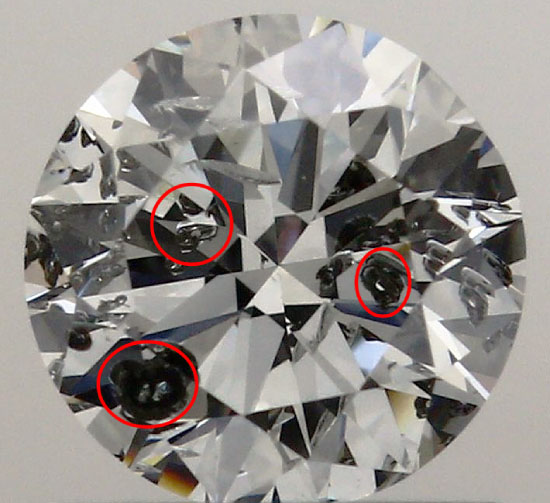
Here at Rare Carat we really, really don’t like to suggest specific clarity grades at which we think certain inclusions won’t be a problem. In this case though, we would say that with a diamond graded at VS1 or above (especially by the most reputable grading labs), the likelihood of a huge dark black crystal sitting in the middle of your diamond is pretty low. This does not mean there won’t be one there, but it will just mean that you probably won’t be able to spot it with your naked eyes.
If your diamond is on the lower clarity band (let’s say, sitting around SI1), then it is crucial that you get a 360 video before you commit to the stone. They can really impact the fire and brilliance of the diamond especially if they are located in places that will easily reflect.
When does a crystal inclusion become a problem worth avoiding?
Is a diamond with a crystal inclusion worth considering?
Will a crystal inclusion impact the durability of my diamond or just the appearance?

Crystal Diamond Inclusion FAQs