Diamond Inclusions: Feather | Rare Carat


Feather as represented on GIA report
Hello diamond enthusiasts! Welcome to the next installment of our ‘diamond inclusions’ series! Before we launch into learning (AND LAUGHING) about feathers, we hope you’ll pop back and have a quick old look at our introduction post about all things ‘diamond inclusions’. It will help you to understand more about why inclusions matter, how they are described on a diamond grading report, and other fun things like that.
What is a Diamond Feather?
It’s important to know about feathers, because they are one of the most common inclusions found in diamonds. A feather actually referred to an internal crack or break in a diamond. These cracks/fractures/breaks can be no problem at all… or big trouble indeed, depending on their size and location and color.
With the more innocuous feathers, they will usually be whitish/transparent in color and you most likely will never see them without a 10x magnifying loupe (and who carries one of those around). They will also not cause any real impact to the integrity and durability of the stone, meaning they won’t cause it to deteriorate over time (cracks/fractures/breaks getting bigger for example).

These ‘good’ feathers will be completely enclosed within the diamond itself. Those feathers we can get on board with, and so should you.
What we might call ‘bad’ feathers on the other hand, can be a problem. For instance, they might reach from inside the stone all the way to the surface. This in turn can negatively impact the durability of the stone, because these tiny fractures and cracks can easily grow and expand, eventually even leading to a large crack in the diamond.
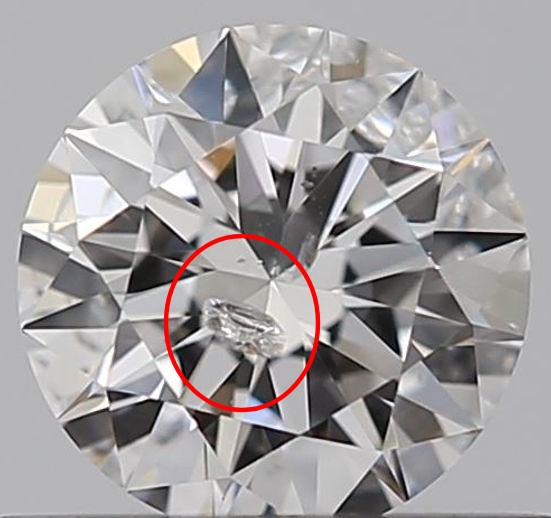
If you spot a feather that goes from deep inside the stone all the way to the surface (especially if it’s at the most vulnerable spots such as girdle/culet/facet)… avoid, avoid, avoid. You might also want to avoid feathers that are darker in color, as they can impact the optics of the diamond, especially if it’s somewhere near the top of the diamond.
So there you have it folks, feathers (like the witches in The Wizard of Oz) can be ‘good’ or ‘bad’. Lean more towards the goodies.
Are all feathers a big problem, or can some be harmless?
When should I avoid buying a diamond with a feather inclusion?
How can I tell if a feather is noticeable in my diamond?

Feather Diamond Inclusion FAQs