The 4 Cs: The Deal With the "Rare Carat Ideal Cut"
Taking the plunge and buying a diamond is kind of like picking a partner - both can be done very successfully online. However just like picking a partner, unless you are 100% sure of what you are getting you may end up with a dud. Even with an Excellent cut grade, your diamond may have some secrets. Fortunately, we've come up with our own set of Ideal proportions that ensures that Excellent looks truly excellent. Our Rare Carat Ideal cut specs are here to help you avoid those dud diamonds.
What is Diamond Cut?
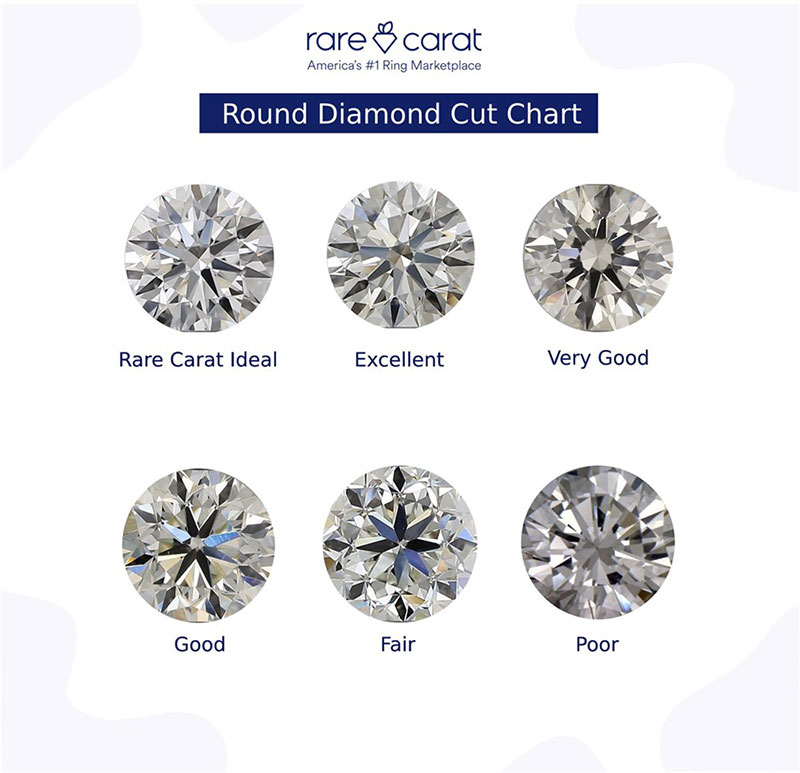
Simply put, ‘cut’ refers to the proportions of the stone. A well-cut diamond will not just enhance the brilliance (white light), fire (rainbow color light) and scintillation (sparkle ‘flashes’) of the stone, but it can help diminish the impact of inclusions and even make a yellowish stone appear whiter. On the other hand, a poorly cut diamond can make it seem dull and lifeless. You might think that going for an Excellent cut stone will negate any problems, but not all Excellent cuts are created equal. Two diamonds with a GIA triple Excellent cut grade may perform in very different ways in reality.
Why Diamond Cut Matters
The subtle differences in the proportions of each stone will completely change its interaction with the light. Of course, if a stone is graded with a triple Excellent grade from GIA you can be pretty sure that the diamond is going to be beautiful, however in order to truly understand the subtleties of diamond performance you need to look beyond the grading report. For example, if a diamond is cut too deep (depth of 64% or more), the stone will actually look smaller because all of its weight is being hidden underneath. It will also lack some serious sparkle. Equally, an Excellent cut diamond could have a pavilion angle of more than 41.25°, which will cause light to ‘leak’ beneath the table and appear dull.
Why Rare Carat Ideal Cut?
Here's where we come in. Instead of leaving it up to chance, we've used strict parameters to sort the very most Excellent of the Excellent. We're transparent about what we consider our Rare Carat Ideal Cut stats, so you can check them out yourself to compare.
For Rounds, Aim For:
Table width percentage between 54%-60%
Depth percentage between 59%-63%
Crown angle between 33%-35%
Star length of 50%
Girdle of 2.5%-4%
Girdle thickness of Thin to Thick
This way, you can ensure the diamond's cut is optimized to give the stone the appearance of maximum weight and sparkle. Want to know more about cut? Just click the Cut tag to get your education on.
What does “cut” mean when selecting a diamond?
What proportions should I look for in a well‑cut round diamond?
What's the deal with “Rare Carat Ideal Cut”?

Rare Carat Ideal Cut FAQs