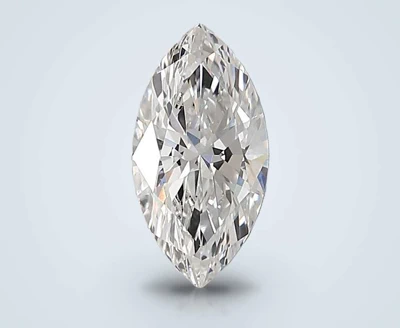
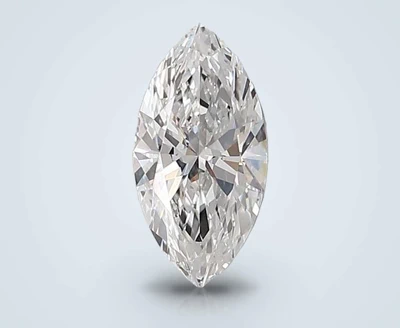
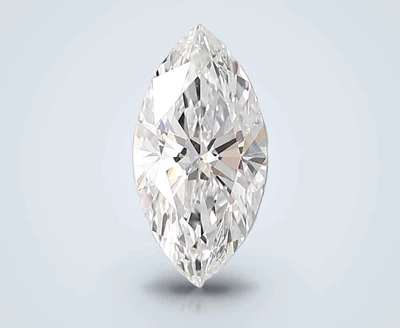
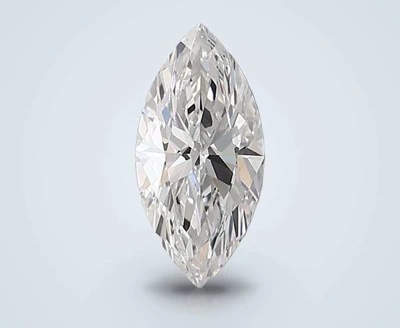
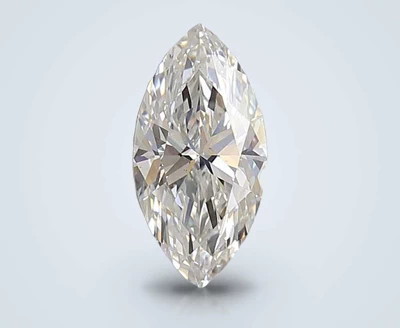
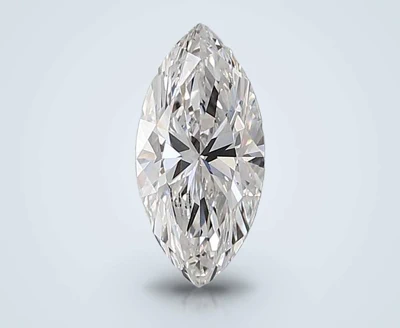
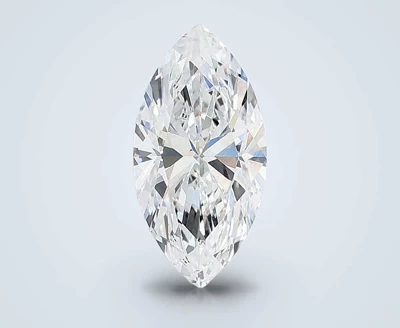
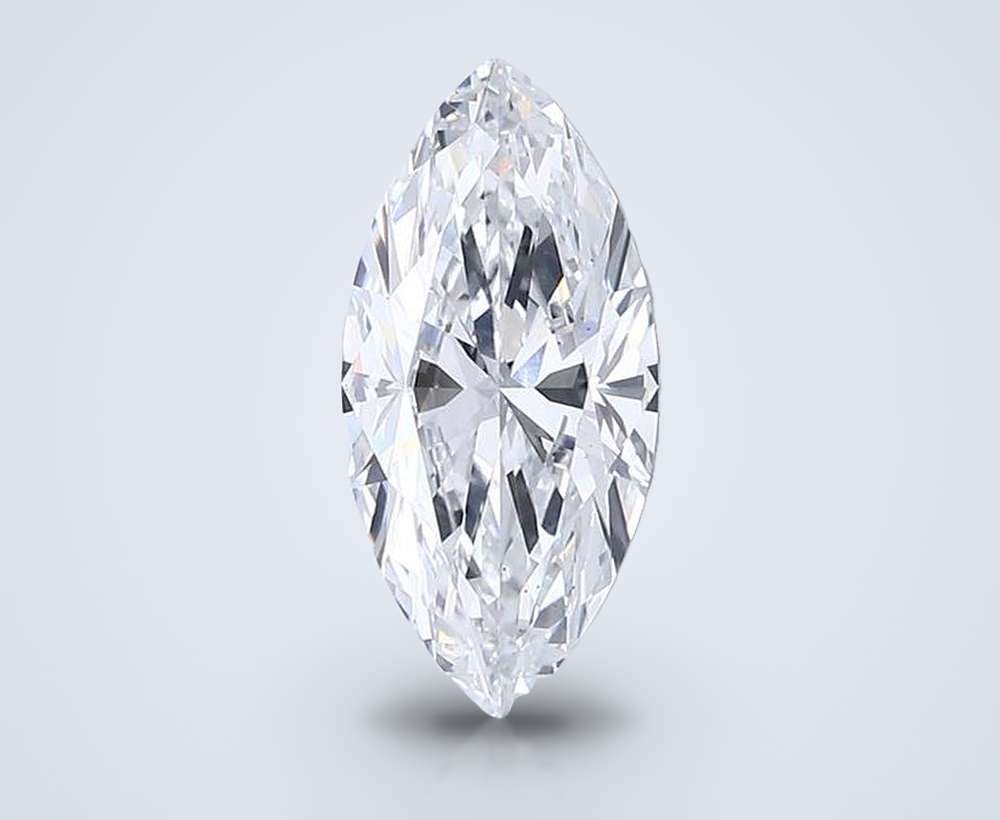
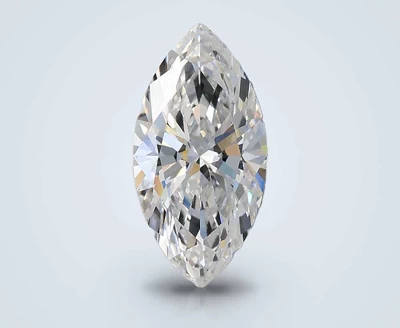
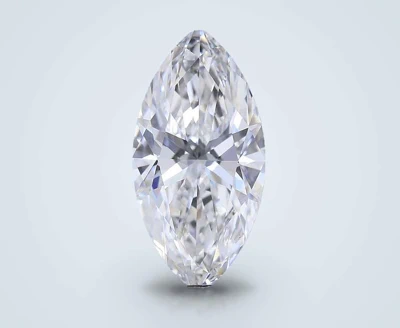
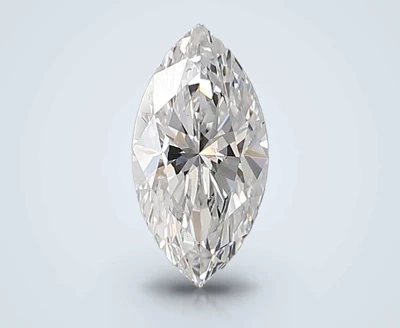
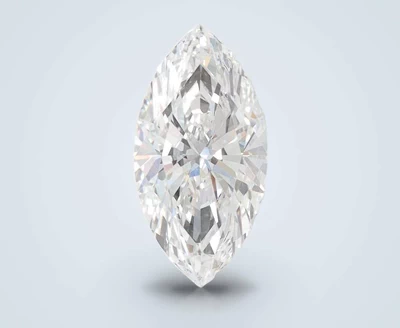
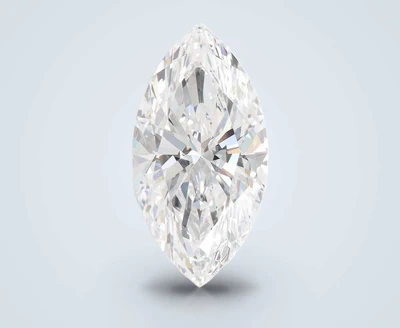
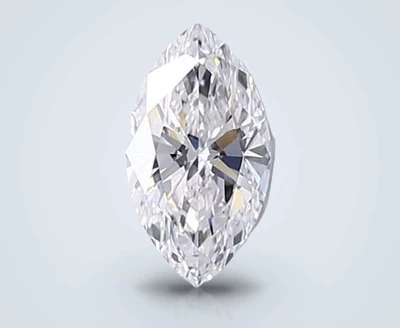
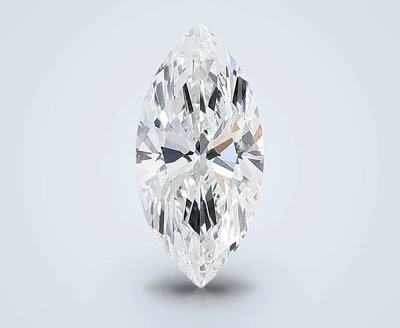
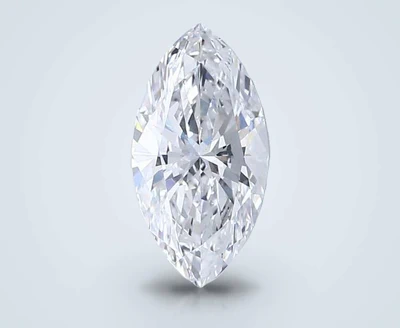
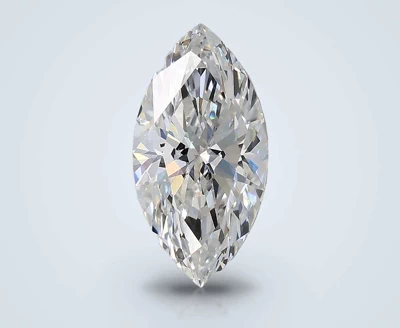
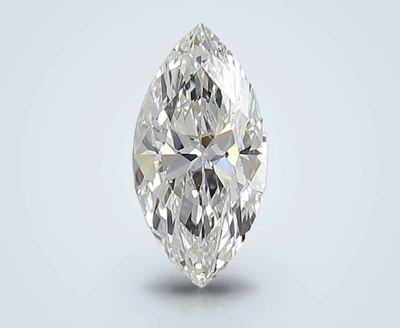
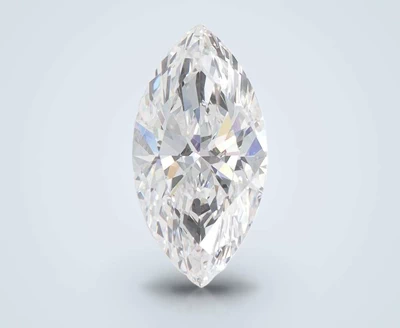
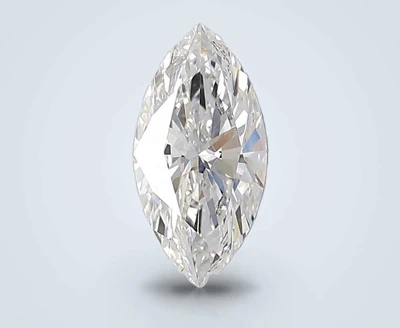
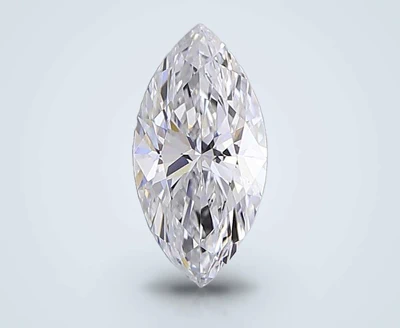
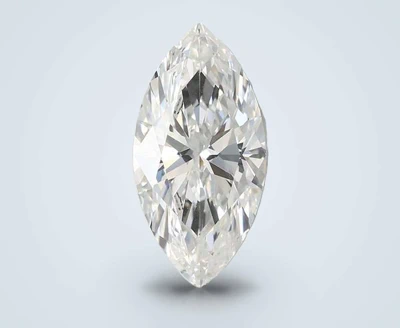
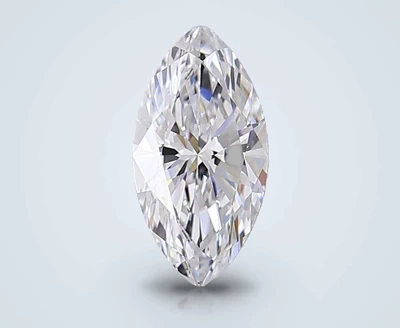
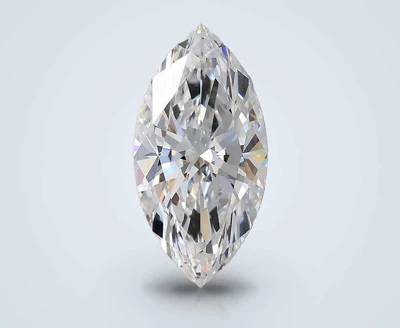
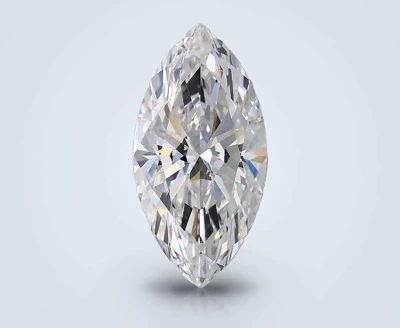
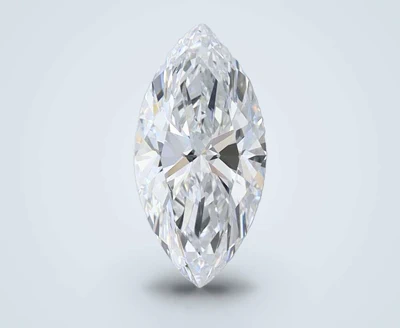
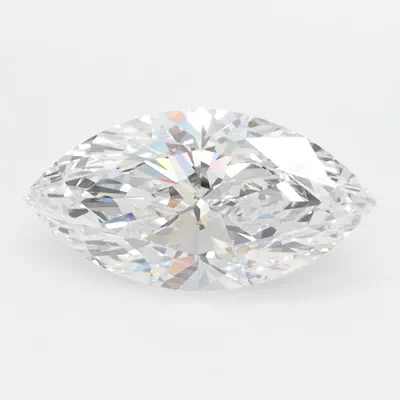
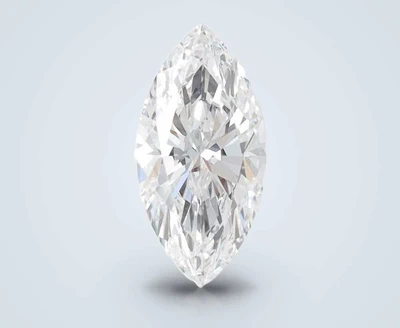
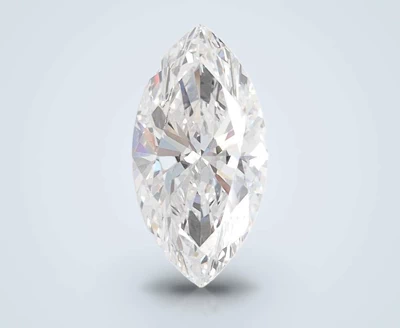
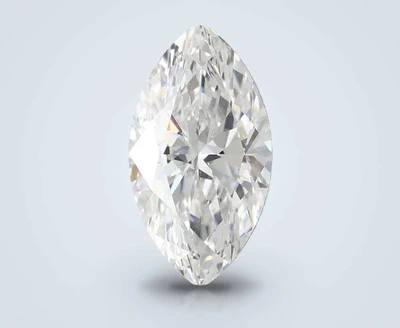
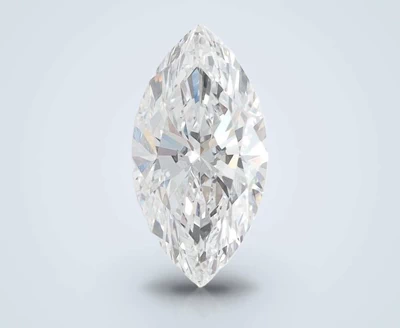
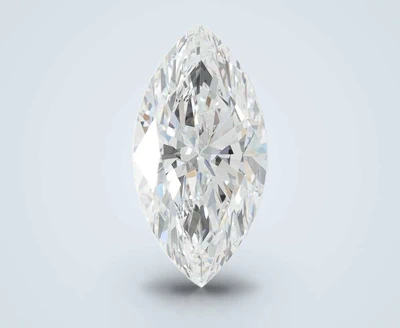
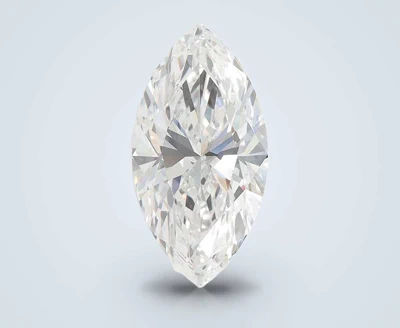
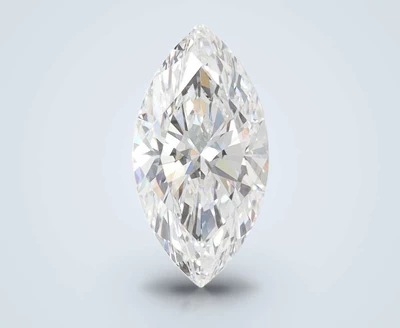
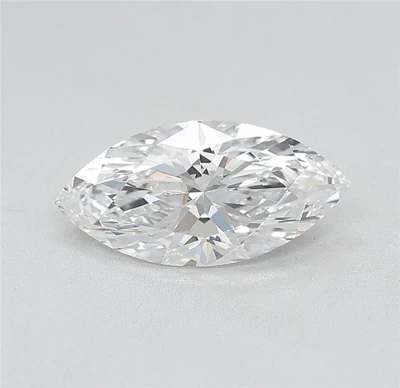
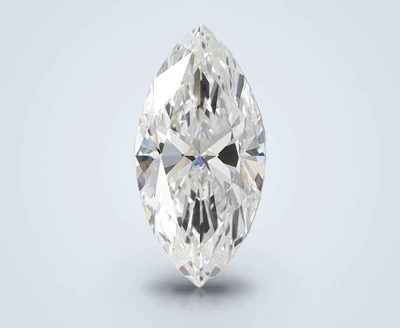
More finger coverage per carat
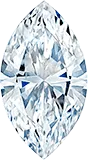
No other shape stretches its weight across as much surface. A well cut 2 carat round measures about 8.1 mm across, and a boat shaped diamond of the same weight runs noticeably longer from tip to tip, so it gives a bigger look without a heavier stone. That effect stacks with lab pricing: a lab created diamond costs far less than a mined one of the same size and grade.
If you prefer a stone from the earth and the stronger resale value that comes with it, compare natural marquise cut diamonds alongside these.
Choosing a marquise cut lab grown diamond by ratio
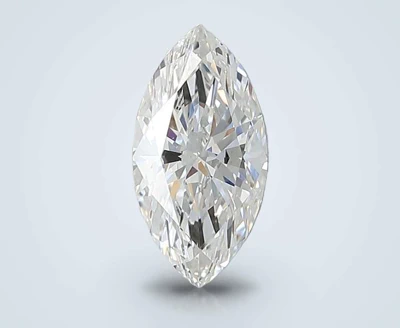
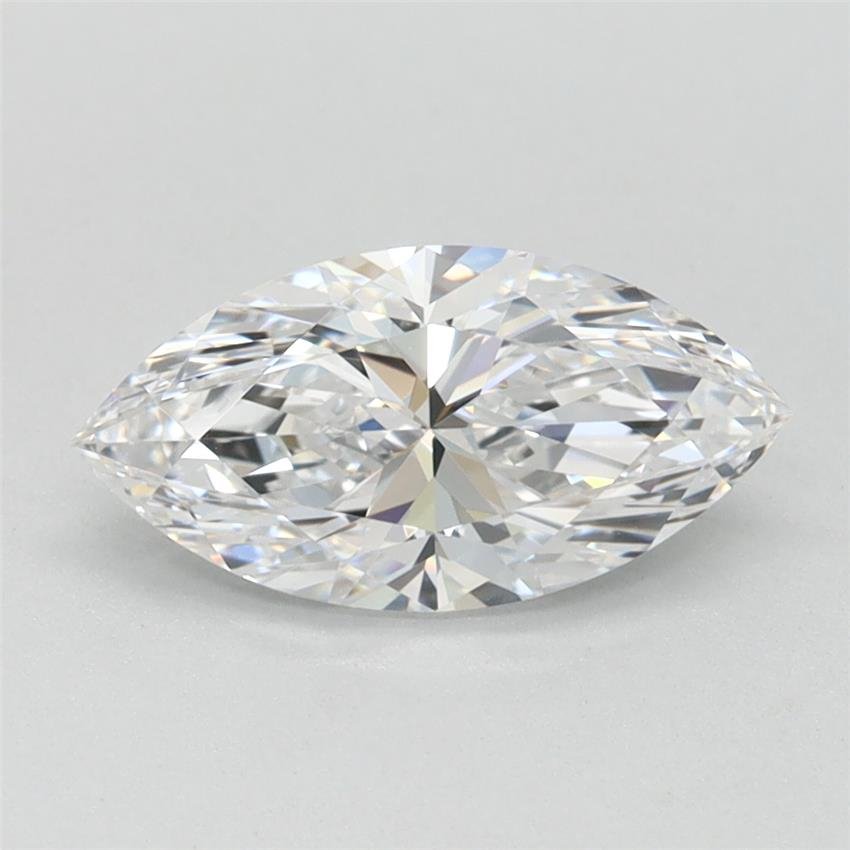
Most marquise lab diamonds fall between a length to width ratio of 1.75 and 2.25, and where you land changes the character of the ring. Toward the lower end the shape is fuller and softer, almost an oval with points. Toward the upper end it turns slim and dramatic. Neither is right or wrong. Hold your hand flat and imagine the stone running along the finger: long, slender fingers carry a slim marquise well, while a fuller ratio tends to balance shorter fingers.
Bow tie and color at the tips
A bow tie is common in this shape: a dark band across the center where light slips out instead of bouncing back. A faint one adds contrast, a heavy one looks like a shadow, and you can only tell which by watching the stone move on video. Color also gathers in the points, so a stone that faces up white in the middle can look warmer at each end. For white gold or platinum, go a grade or so higher in color than you would for a round; yellow and rose gold are kinder to a warmer stone.
Two points, two V prongs
Each tip is thin and can chip from a hard knock, so this shape needs a V prong over both points. Side prongs then hold it steady without hiding much of the outline, and a bezel guards the whole edge if you work with your hands. For something less expected, an east west setting lays the stone across the finger instead of along it.
See how others have set theirs in marquise lab grown engagement rings, or start with one weight, such as 2 carat lab grown marquise diamonds.