Diamond Inclusions: Pinpoint | Rare Carat


Pinpoint as represented on GIA report
Well hello there! Welcome to our blog post on the humble pinpoint. We are knee-deep in our quest to bring you the most important information you need in order to buy that special stone. Knowledge is power people. With that in mind, we’ve created a FOOLPROOF guide on all the most common diamond inclusions, so that you can spend less time stressing about clarity and more time enjoying this once in a lifetime experience.
What is a Pinpoint?
Pinpoints are by far the most common of all the diamond inclusions, which is totally fine, because in our opinion they can also be the least offensive on the eyes. Pinpoints – just like needles and clouds - sit in the ‘crystal’ family of inclusions. In fact, we briefly discussed them when we covered ‘clouds’, and if you were paying attention (which you darn well should have been) you will remember that a cloud was just a cluster of tiny pinpoints all sitting together kinda snug. The general rule in diamond clarity grading is that there needs to be at least three pinpoints in one location to even qualify as a cloud, so on their own, pinpoints are exceptionally difficult to spot - even under magnification:
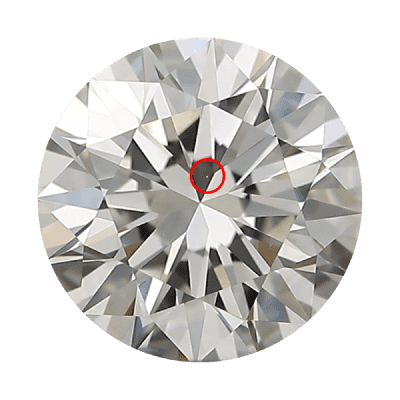
They are usually just so tiny that mostly they are not even marked on the grading certificate, and instead the person grading the diamond will pop in a comment saying something along the lines of ‘pinpoints not shown’ or similar. That way potential buyers know that there are pinpoints that are so small they weren’t even worth putting on the grading report.
If you are interested in a particular diamond and the grading report tells you it has pinpoints, don't fret. If you're worried, ask our team of gemologists for their professional opinion with regards to how those pinpoints might affect the optics/clarity of the stone in real life.
What should I ask or look for if I’m viewing a diamond with pinpoint inclusions?
If a diamond listing mentions pinpoints, should I worry about how it looks?
When do pinpoints become a problem for appearance or clarity?

Pinpoint Diamond Inclusion FAQs