The No-BS guide tobuying a diamond
You shouldn’t need a gemology degree to buy a ring. We’ve turned over a decade of diamond expertise into plain English so you can shop with confidence.
 Money-back
 guarantee
 GIA certified
 diamonds
 #1 on
#1 on Trustpilot
Free insured
shipping
shipping
The No-BS guide tobuying a diamond
You shouldn’t need a gemology degree to buy a ring. We’ve turned over a decade of diamond expertise into plain English so you can shop with confidence.
Money-back guarantee
GIA certified diamonds
#1 on Trustpilot
Free insured
shipping
shipping
What’s inside this guide
- 01.The 4Cs overview
- 02.Diamond color
- 03.Diamond clarity
- 04.Diamond carat
- 05.Diamond cut
- 06.Lab grown vs natural
- 07.FAQ's

Engagement rings
Tennis bracelets
Earrings
Eternity bands
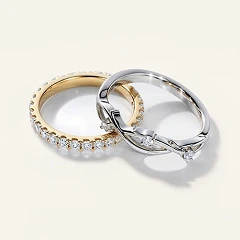
Wedding rings
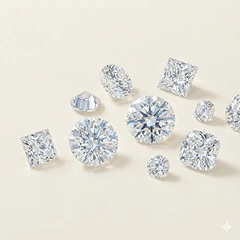
Lab diamonds
Necklaces

Men's bands
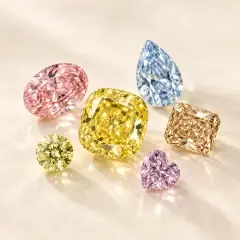
Colored diamonds

Stackable rings

Solitaire
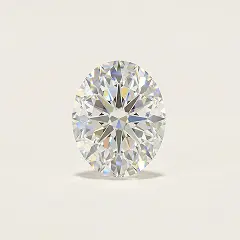
Oval diamonds
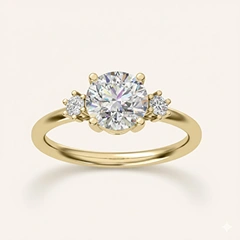
Three stone
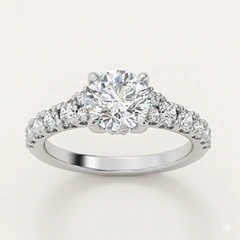
Pavé
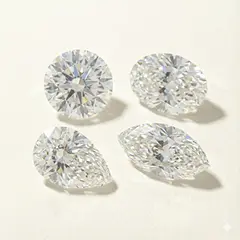
1 carat diamonds
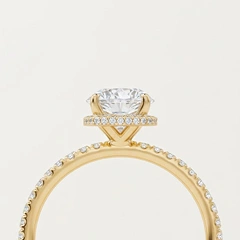
Hidden Halo
Silver jewelry
Hoops
Christian Siriano
Plain jewelry
Personalized jewelry
Pearl jewelry
Diamond Charts: The 4Cs
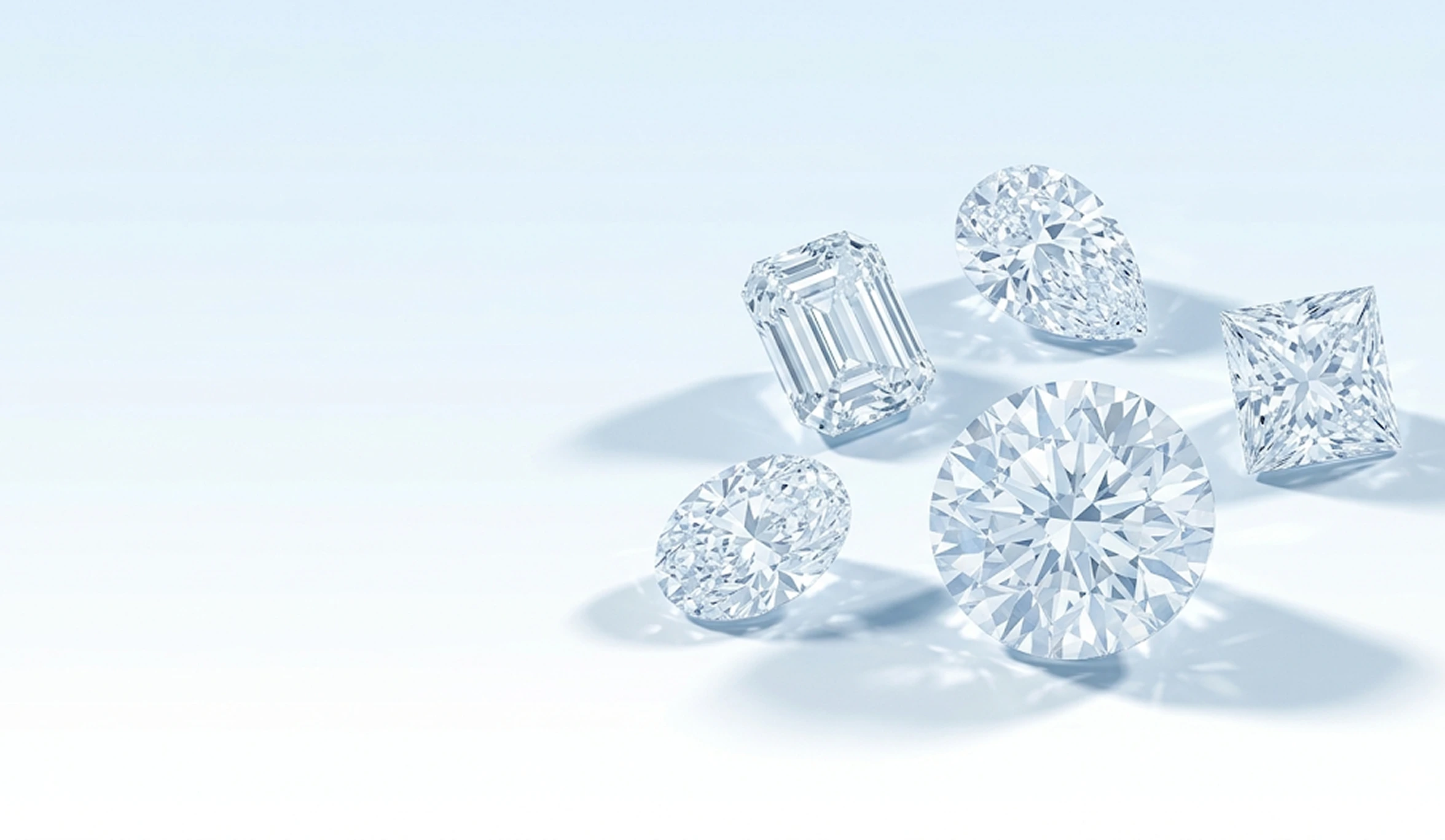
The 4 Cs (cut, color, clarity, and carat) are the standard framework for grading and valuing diamonds' quality. Each attribute is judged separately, and how they balance against one another shapes both a diamond's beauty and its price.
- Color: Graded D (colorless) to Z (light yellow/brown). Less color generally means higher value.
- Clarity: Measures internal (inclusions) and surface (blemishes) flaws, graded from Flawless (FL) to Included (I1-I3).
- Carat: The diamond's weight. One carat equals 200 milligrams. Price rises non-linearly with carat weight, especially at round numbers (2ct, 3ct).
- Cut: How well the diamond's facets interact with light, affecting brilliance and sparkle. Graded Rare Carat Ideal to Poor, it's considered the most important factor for a diamond's visual beauty.
01.Color
Color: The art of seeing nothing
With diamond color, you're actually grading the absence of color. The less tint a diamond has, the higher it grades - and the more it costs.
Diamonds are graded on a scale from D (completely colorless) to Z (noticeable yellow or brown tint).
The thing most people don't realize is that the differences between adjacent color grades are incredibly subtle. Even trained gemologists with perfect lighting and master comparison stones are sometimes unable to identify immediate differences.
When considering diamond color and price, the real challenge is finding the color grade that looks most beautiful to you and fits within your budget. Lower diamond grades can result in large cost savings.
RARE CARAT PRO TIP
You can comfortably step to G or H and save 10-15% - these grades look identical in a ring setting and daily wear.

Karly
GIA Gemologist · 15 years experience
Diamond Color Chart
G Color: Appears colorless
Excellent balance of quality and value, making it the most popular choice.
K
J
I
H
G
F
E
D
Shop diamonds by shape
 Round
Round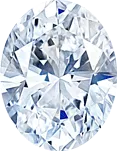 Oval
Oval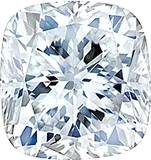 Cushion
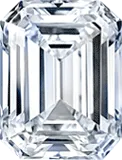 Emerald
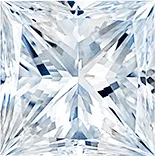 Princess
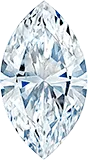 Marquise
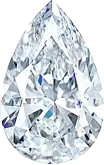 Pear
Pear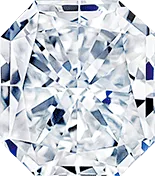 Radiant
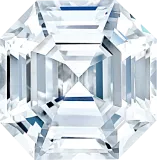 Asscher
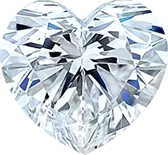 Heart
Heart02.Clarity
Clarity: Every diamond has a story
Natural diamonds formed under immense heat and pressure deep in the Earth - so it's normal for them to have tiny internal characteristics called inclusions. Clarity grades tell you how visible those are.
Every diamond has them and the clarity scale runs from FL (Flawless) down to I3 (Included, visible to the naked eye). This is where the identification of “eye-clean” comes in.
An eye-clean diamond has inclusions that exist on paper - they're noted on the certificate, a gemologist can see them under magnification - but to your eyes, in normal lighting, the stone looks perfectly clean.
RARE CARAT PRO TIP
You could comfortably step for VS1 or VS2 and save 10-20% as they’re also eye-clean and the difference is invisible without magnification.
Karly
GIA Gemologist · 15 years experience
Diamond Clarity Chart
Very Very Slightly Included 2
Excellent clarity with minute inclusions that are difficult to detect even under magnification.
SI1
VS2
VS1
VVS2
VVS1
IF
FL
03.Carat
Carat weight: Bigger isn't always better
Carat is the attribute everyone fixates on - and the one most likely to put you over your budget if you're not careful. Let's recalibrate.
To start, carat is a unit of weight, not size. Two diamonds with the same carat weight can look complete different in sizes depending on how they're cut. A well-cut 0.9ct diamond can actually look larger face-up than a poorly cut 1.0ct diamond.
RARE CARAT PRO TIP
Diamond prices don’t scale linearly. They jump at what the industry calls “magic numbers” - 0.5ct, 1.0ct, and 2.0ct.
A 0.99ct diamond can be priced meaningfully lower than a 1.01ct of the same quality, even though you wouldn’t be able to visually tell the difference on your finger. Purchasing a diamond under one of these “magic numbers” is one of the easiest ways to save money.
Karly
GIA Gemologist · 15 years experience
04.Cut
Cut: Where the magic happens
If you take one thing away from this entire guide, let it be this: Cut is the single biggest factor in how beautiful a diamond looks.
RARE CARAT PRO TIP
Fancy shapes (oval, pear, cushion, etc.) don't receive an official cut grade from GIA. That's where our AI comes in - we analyze proportions and light performance data to give you a quality score you can actually trust.
Karly
GIA Gemologist · 15 years experience
Diamond Cut Chart
RC Ideal cut
The best of the best. Maximizes brilliance, fire, and sparkle with perfect proportions.
Good
Very Good
Excellent
RC Ideal cut
05.Lab vs. Natural
Lab-grown vs. natural diamonds
This is one of the most-debated topics in diamonds business right now. Here's an honest look at both.
Lab-grown diamonds are chemically, physically, and optically identical to natural diamonds. They have the same crystal structure, hardness, and sparkle. The difference is in the origin: one formed over billions of years underground, the other was created in a lab over a few weeks. A certified gemologist would need specialized equipment to tell them apart.
So why the price gap? Jewelry quality natural diamonds are rarer and have supply chain constraints built in to keep prices artificially high. Lab-grown diamonds have scale and efficiency on their side. Neither is “fake” - they’re both real diamonds. It comes down to what you value.
RARE CARAT PRO TIP
There's no universally “right“ choice here. If you care about getting the biggest, most impressive stone for your budget, lab-grown is a no-brainer. If tradition, rarity, or long-term value matters to you, go natural. We carry both - because we think the choice should be yours, not ours.
Karly
GIA Gemologist · 15 years experience
Natural diamond
Lab-grown diamond
Composition
Pure carbon crystal
Composition
Pure carbon crystal
Hardness
10(Mohs scale)
Hardness
10(Mohs scale)
Visual difference
None, identical to the eye and under magnification
Visual difference
None, identical to the eye and under magnification
Price (1ct, Ideal)
$1,100 - $10,000
Price (1ct, Ideal)
$400 - $1,200
Resale value
Retain ~30% - 50%
Resale value
Lower than natural
Origin story
1-3 billion years, deep Earth
Origin story
2-6 weeks, laboratory
Environmental
Mining impact varies
Environmental
No mining
Certificate
GIA, IGI
Certificate
GIA, IGI, GCAL
Best for
Tradition, resale, heirloom
Best for
Value, size, ethical sourcing
06 · FAQS
Frequently asked questions
How much should I spend on an engagement ring?
What's the best diamond shape for an engagement ring?
Is a lab-grown diamond a "real" diamond?
What does "eye-clean" mean?
How do I know I'm not getting ripped off?
What is diamond fluorescence? Should I avoid it?
Ready to find your engagement ring?
You've done the research. Now let our AI and gemologists take it from here - we'll help you find the best diamond at the fairest price.